Wood Furniture Cleaning Tips:
How to Clean Wood Without Ruining the Finish
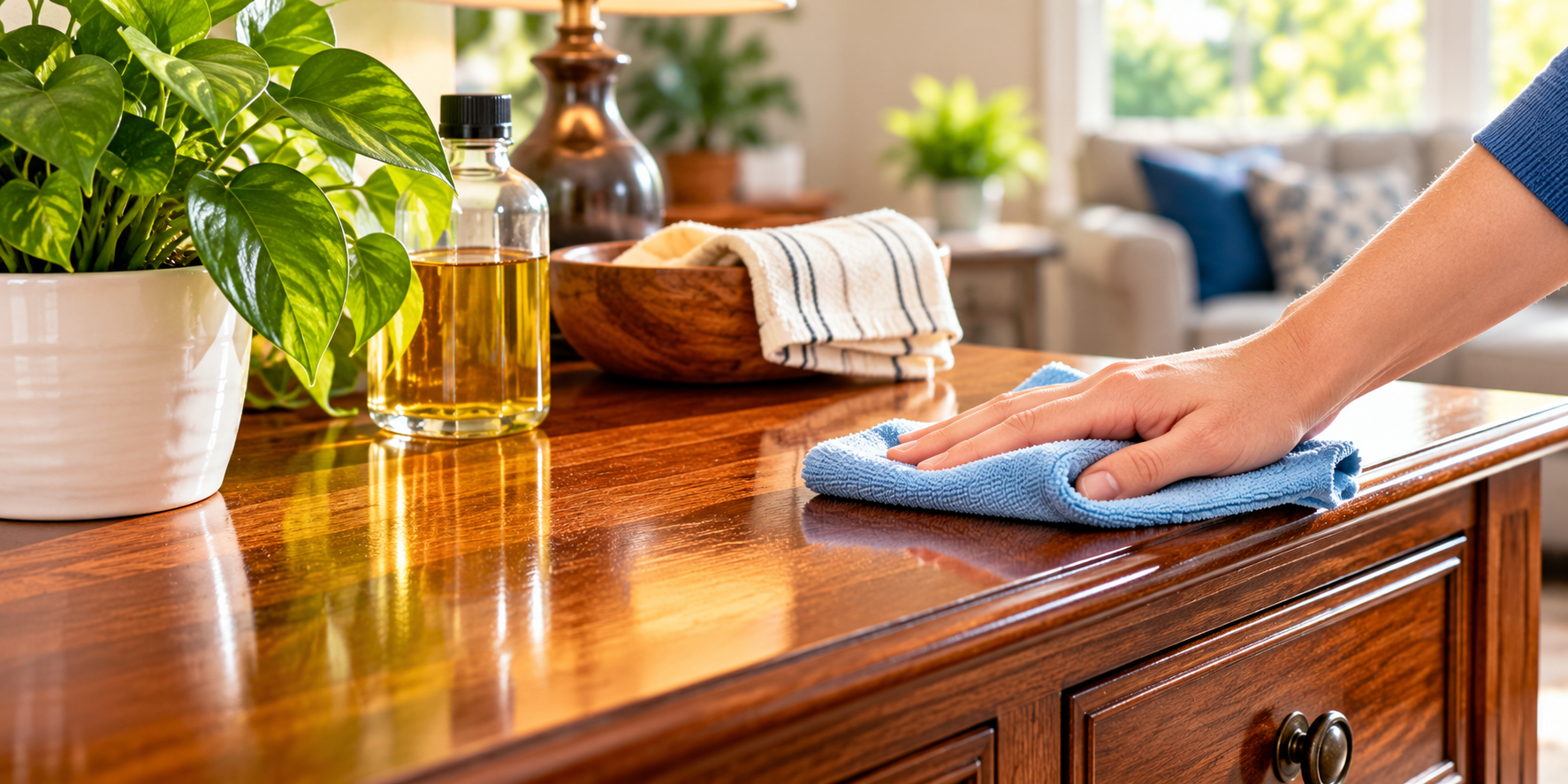
Wood furniture is one of those things that makes a home feel warm, comfortable, and pulled together.
Until someone sets a wet glass on your beautiful coffee table.
Or leaves a sticky fingerprint on the dining room chair.
Or decides your antique dresser is the perfect place to park a half-eaten lollipop.
Suddenly, that lovely piece of furniture is looking a little less lovely.
The good news? Cleaning wood furniture doesn't have to be complicated.
In fact, the biggest secret to keeping wood furniture beautiful is knowing when to clean gently—and when to leave the heavy-duty cleaning products in the cabinet.
Wood finishes can be surprisingly sensitive to water, heat, chemicals, and aggressive scrubbing.
Here's how to remove everyday dirt, fingerprints, and grime without turning a simple cleaning job into a furniture restoration project.
1. Know What Kind of Wood Furniture You're Cleaning
Before you reach for a cleaning product, take a moment to consider the furniture's finish. Because when it comes to cleaning wood furniture, the finish matters as much as the wood itself.
Sealed or Varnished Wood Furniture
Many modern wood furniture pieces have protective finishes such as polyurethane, lacquer, or varnish.
These finishes help protect the surface from everyday wear.
Some can tolerate careful cleaning with a lightly damp cloth, provided the manufacturer allows it.
Waxed Wood Furniture
Waxed furniture requires different care.
Some cleaning products can strip or soften the wax, leaving the surface uneven or dull.
Use cleaning methods and maintenance products specifically recommended for waxed finishes.
Oiled Wood Furniture
Oil-finished furniture may require specialized cleaning and periodic maintenance.
Avoid assuming that an ordinary furniture polish or household cleaner is suitable.
Antique or Unfinished Wood Furniture
Antique, unfinished, painted, or otherwise delicate wood furniture deserves extra caution.
Moisture and modern cleaning chemicals may damage original finishes, patina, or decorative details.
For valuable antiques, consult a qualified furniture conservator before attempting stain removal or refinishing.
And if you're unsure what finish you have? Start with gentle dry dusting until you can identify the proper care method.
2. Dust Wood Furniture Regularly
Dusting may not be glamorous, but it's one of the easiest ways to protect wood furniture. Dust collects on tabletops, shelves, chair legs, and decorative details.
Over time, accumulated dust and grit can contribute to surface scratches when rubbed across the finish.
How to Dust Wood Furniture
- Use a clean, soft microfiber cloth.
- Gently lift dust from the surface.
- Work along the wood grain when practical.
- Use a soft brush for carvings and hard-to-reach details.
- Shake out or replace the cloth when it becomes dirty.
For most everyday dusting, you don't need furniture polish. A clean microfiber cloth is often enough.
And remember to dust the less obvious areas, too.
The tops of bookcases and the backs of furniture have an amazing ability to collect enough dust to qualify as archaeological sites.
3. How to Clean Wood Furniture With a Damp Cloth
Sometimes dusting isn't enough. Fingerprints, light grime, and everyday handling can leave furniture looking dull or dirty.
For many modern, intact sealed finishes, a lightly damp cloth may be appropriate. But always check the manufacturer's care instructions first.
Step-by-Step Wood Furniture Cleaning
- Remove loose dust with a clean microfiber cloth.
- Check that the finish is suitable for damp cleaning.
- Lightly dampen a soft cloth with water or a manufacturer-approved cleaning solution.
- Gently wipe the surface without saturating it.
- Avoid allowing moisture to collect around seams, joints, or edges.
- Immediately dry the area with another clean, soft cloth.
The cloth should be barely damp. Not dripping. Not soaking.
And definitely not wet enough to make your dining table wonder whether it's been relocated to a swimming pool.
Important: Don't use this method on unfinished, damaged, antique, or moisture-sensitive finishes unless an appropriate expert or manufacturer recommends it.
4. How to Remove Sticky Residue From Wood Furniture
Sticky spots are an occupational hazard of family life. Syrup, spilled drinks, food residue, and mysterious substances that nobody admits touching can all leave a tacky mess.
Before trying to remove the residue, identify the furniture's finish.
For Compatible Sealed Wood Finishes
Start with a soft cloth lightly dampened with water, if the manufacturer permits it. Gently wipe the affected area.
If the residue remains, use a mild cleaner specifically approved for that furniture finish.
Apply the cleaner to the cloth rather than spraying it directly onto the furniture, unless the product directions say otherwise.
Then remove any remaining moisture and dry thoroughly.
What About Stubborn Sticky Spots?
If the residue doesn't come away with gentle cleaning, stop before reaching for stronger chemicals.
Adhesives, wax buildup, damaged finishes, and food residue may require completely different treatments.
Avoid using metal scrapers, abrasive pads, or solvents without confirming that they're safe for the finish.
You want to remove the sticky spot. Not the protective coating underneath it.
5. How to Remove Water Rings From Wood Furniture
Ah, the dreaded water ring. One forgotten coaster and suddenly your coffee table has acquired a permanent-looking souvenir. Water rings can appear white, cloudy, gray, or dark.
The color and appearance may offer clues about the damage, but they don't provide a foolproof diagnosis.
White or Cloudy Water Rings
A pale ring may indicate moisture trapped in or affecting the finish. Sometimes the mark fades as the surface dries.
Start by removing the source of moisture and allowing the furniture to dry naturally in a stable indoor environment.
Don't immediately attack the ring with heat, oil, toothpaste, or abrasive cleaners. These popular home remedies can damage certain finishes.
Dark Water Stains
Dark discoloration may indicate that moisture has penetrated more deeply, potentially affecting the wood itself.
These stains can be difficult to remove without specialized treatment.
If the piece is valuable or the finish is uncertain, consult a furniture restoration professional.
Avoid using a hot iron or hair dryer as a first-line treatment. Heat can soften, blister, discolor, or otherwise damage furniture finishes.
Sometimes patience is the safest first step. Not very exciting, admittedly. But considerably cheaper than refinishing the entire tabletop.
6. Remove Fingerprints and Everyday Smudges
Wood furniture gets touched constantly. Dining chairs, cabinet doors, coffee tables, and dresser drawers are particularly good at collecting fingerprints.
For a compatible sealed finish, try gently wiping the area with a clean microfiber cloth. If necessary, use a lightly damp cloth or manufacturer-approved cleaner.
Dry immediately.
Pay attention to frequently touched areas such as:
- Drawer fronts
- Cabinet doors
- Chair backs
- Table edges
- Desk surfaces
- Wooden armrests
Regular light cleaning prevents grime from building up. And it takes much less effort than trying to remove six months of sticky fingerprints in one afternoon.
7. Should You Use Furniture Polish?
Furniture polish can make wood surfaces look shiny. But shiny doesn't always mean clean. Some polishes leave residues that attract dust, create buildup, or complicate future refinishing.
Others contain ingredients that may not be suitable for certain finishes.
Before using polish:
- Check the furniture manufacturer's recommendations.
- Confirm compatibility with the finish.
- Test in an inconspicuous area.
- Apply only as directed.
- Avoid excessive buildup.
Don't assume that every piece of wood furniture needs regular polishing.
Many modern finishes require nothing more than dusting and occasional gentle cleaning.
If your furniture already looks good, there's no reason to introduce another product. Sometimes the best cleaning supply is the one you leave on the shelf.
8. What Not to Use on Wood Furniture
This is where a little caution can save a lot of money.
Vinegar
Vinegar is a popular household cleaner, but its acidity may damage or dull certain wood finishes.
Avoid using vinegar unless the furniture manufacturer specifically recommends it.
Ammonia and Harsh Cleaners
Strong household cleaners can affect finishes, coatings, and adhesives.
Stick with products approved for the furniture.
Abrasive Sponges and Scrubbing Pads
Rough materials can scratch or wear away protective finishes.
Use soft cloths instead.
Excess Water
Standing water can penetrate joints, seams, damaged finishes, and exposed wood.
Use minimal moisture and dry promptly.
Steam Cleaners
Heat and moisture can damage wood finishes, loosen adhesives, or cause swelling.
Don't steam-clean wood furniture unless the manufacturer explicitly approves the method.
Cooking Oils and Homemade Oil Mixtures
Olive oil, vegetable oil, and other kitchen oils are sometimes recommended as furniture treatments.
But they can leave sticky residue, attract dirt, or cause undesirable changes to the surface. Your dining table doesn't need salad dressing.
Silicone-Heavy Products
Some silicone-containing polishes can leave residues that complicate future furniture refinishing. Use only products appropriate for the finish and your maintenance goals.
9. Protect Wood Furniture From Everyday Damage
Cleaning is important. Preventing damage is even better. A few simple habits can keep furniture looking beautiful longer.
Use Coasters
Coasters protect tables from condensation, spills, and some surface contact.
Choose coasters with a suitable protective backing.
And encourage everyone to actually use them.
A revolutionary concept, I know.
Use Placemats and Trivets
Hot dishes and serving pieces can damage certain finishes.
Protect dining tables with appropriate heat-resistant trivets and placemats.
Avoid Direct Sunlight
Extended exposure to sunlight can fade or discolor wood and some finishes.
Consider window coverings or furniture placement that reduces prolonged direct exposure.
Maintain Reasonable Indoor Humidity
Wood naturally expands and contracts as humidity changes.
Large or prolonged fluctuations can contribute to movement, cracking, or joint problems.
Maintain a stable indoor environment appropriate for your furniture.
Lift Objects Instead of Dragging Them
Decorative items, lamps, and heavy objects can scratch furniture when dragged across the surface.
Lift them when rearranging. A little extra effort now is better than discovering a long scratch across your favorite table later.
10. How Often Should You Clean Wood Furniture?
You don't need an elaborate furniture maintenance calendar. A simple routine works for most households.
Weekly
- Dust frequently used surfaces.
- Wipe up fresh fingerprints when appropriate.
- Check for spills or moisture.
- Dust accessible decorative details.
Monthly
- Clean less accessible areas.
- Inspect furniture for sticky residue or buildup.
- Check coasters, placemats, and protective pads.
- Look for changes in the finish.
As Needed
- Clean spills immediately.
- Address stains using finish-appropriate methods.
- Follow any manufacturer-recommended maintenance schedule.
- Seek professional advice for damaged or delicate finishes.
The exact schedule depends on how heavily the furniture is used.
A dining table shared by three children may need attention daily.
A decorative side table in a rarely used guest room? Probably not so much.
11. When Wood Furniture Needs More Than Cleaning
Sometimes furniture looks dirty when the real problem is a damaged or deteriorating finish.
Watch for:
- Peeling or flaking finish
- Persistent cloudy patches
- Deep scratches
- Dark water stains
- Sticky or softened finish
- Cracking or splitting wood
- Areas where the protective coating has worn away
Cleaning products won't necessarily fix these problems. In some cases, additional cleaning may make them worse.
If the furniture is valuable, antique, or sentimental, consult a qualified restoration professional before attempting repairs.
Not every problem can be solved with a microfiber cloth. A disappointing truth, but an important one.
Frequently Asked Questions About Cleaning Wood Furniture
What's the best way to clean wood furniture?
For routine care, use a clean, soft microfiber cloth to remove dust. For compatible sealed finishes, a lightly damp cloth or manufacturer-approved cleaner may be appropriate.
Can I clean wood furniture with soap and water?
Some sealed finishes tolerate carefully diluted mild soap, but others do not. Check the manufacturer's instructions and avoid excess moisture.
Is vinegar safe for cleaning wood furniture?
Not universally. Vinegar can affect certain finishes, so it's best avoided unless specifically recommended for your furniture.
How do I remove sticky buildup from a wood table?
Start with gentle cleaning appropriate for the finish. If the residue persists, identify whether it's food, adhesive, polish buildup, or finish damage before using stronger treatments.
Can I use olive oil to polish wood furniture?
It's generally not recommended as a routine furniture polish. Cooking oils may leave unwanted residue and aren't suitable for every finish.
How do I make dull wood furniture shine again?
First determine whether the dullness comes from dust, residue, or worn finish. Clean only with approved methods. If the finish is damaged, polishing may not solve the problem.
Keep Going
Good wood furniture cleaning isn't about polishing every surface until you can see your reflection.
It's about removing dust, handling spills promptly, protecting the finish, and avoiding cleaning products that can do more harm than good.
Start gently, use the right method for the finish, and don't try to scrub away problems that actually require restoration.
For more practical cleaning advice, explore:
- How to Clean Hardwood Floors: Protect wood flooring while removing everyday dirt.
- Cleaning Lighting Fixtures: Safely remove dust from lamps and fixtures.
- Speed Cleaning Your Home: Make household cleaning faster and easier.
- Tips for Rearranging Furniture: Refresh your rooms without unnecessary expense.
With a little regular attention, wood furniture can remain beautiful for years.
And the next time someone puts a dripping glass directly on your coffee table?
Hand them a coaster. Preferably before the water ring appears.
- Clean Home
- Clean
- Wood Furniture Cleaning Tips