Carpet Care and Cleaning Tips:
Keep Your Carpets Looking Their Best
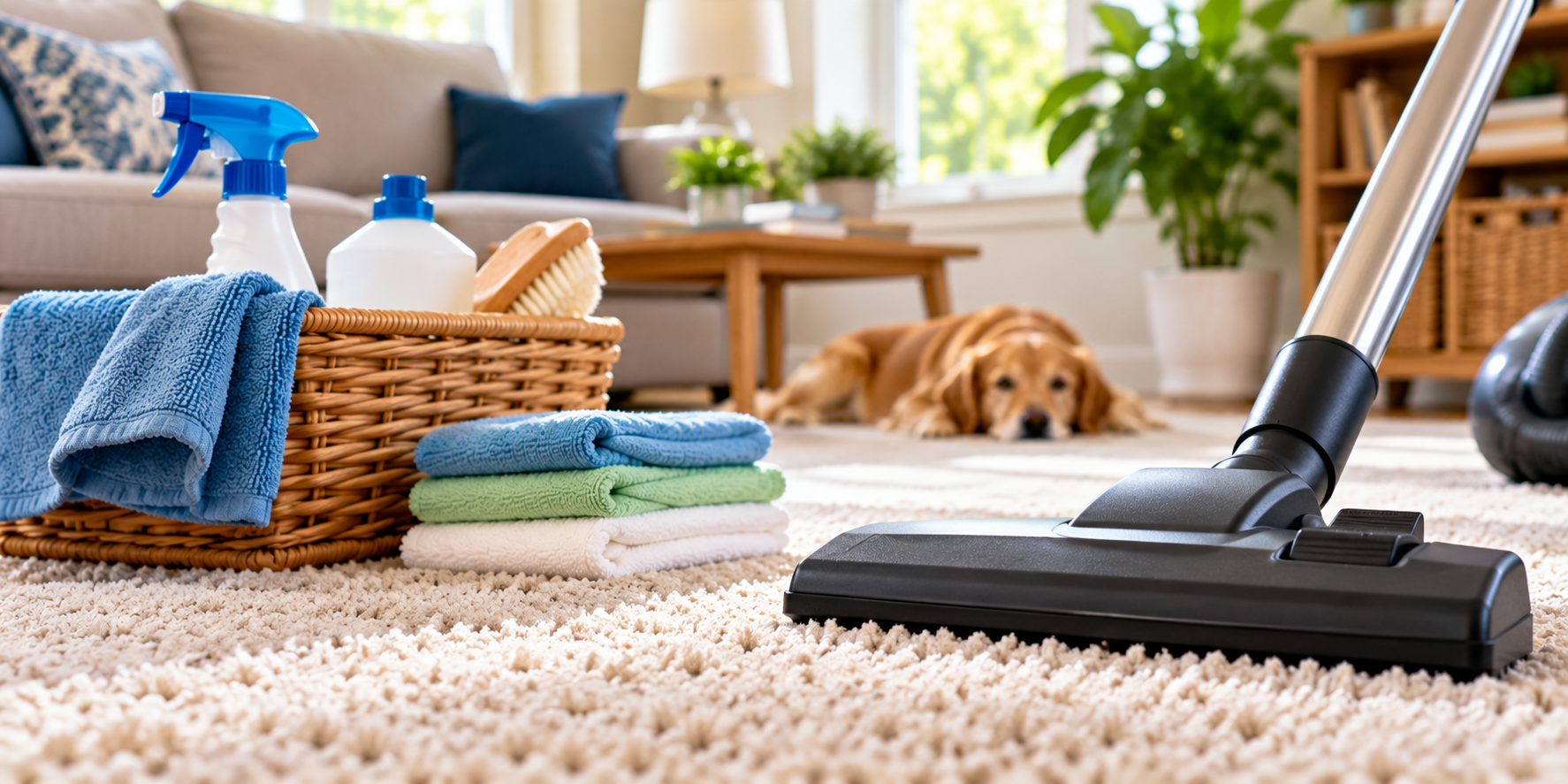
Carpet has a way of making a room feel warm, comfortable, and inviting. It also has an impressive talent for collecting everything your family brings into the house.
Dirt. Dust. Crumbs. Pet hair. The occasional mystery stain that nobody remembers creating.
And somehow, the worst spills always happen on the lightest section of carpet.
The good news? Keeping carpets clean doesn't require constant scrubbing, expensive equipment, or a professional cleaning crew on standby.
A few simple habits can help your carpets look better, last longer, and survive everyday family life.
Here's how to keep the dirt under control without making carpet cleaning your newest full-time job.
1. Vacuum Regularly
If there's one carpet-cleaning habit worth developing, it's regular vacuuming. Dirt and grit settle into carpet fibers, especially in high-traffic areas.
Over time, that trapped debris can contribute to wear and make carpeting look dull. Vacuuming removes much of that loose dirt before it becomes embedded.
How Often Should You Vacuum?
As a general starting point:
- High-traffic areas: Several times a week, or more often as needed.
- Bedrooms and lightly used rooms: About once a week.
- Homes with pets: More frequently, especially where animals spend time.
- Entryways and hallways: As often as needed to control tracked-in dirt.
Adjust the schedule to your household.
A home with three children, two dogs, and a backyard will probably need more vacuuming than a quiet apartment occupied by one exceptionally tidy adult.
Vacuum Slowly
Racing across the carpet at top speed may count as exercise, but it isn't necessarily effective cleaning. Move the vacuum slowly enough to pick up dirt.
Make overlapping passes, and go over heavily used areas from more than one direction when practical.
Use the vacuum setting recommended for your carpet type. Some delicate carpets and certain looped fibers can be damaged by aggressive rotating brushes, so check the carpet manufacturer's instructions.
2. Stop Dirt at the Front Door
One of the easiest ways to keep carpets cleaner is to prevent dirt from reaching them in the first place.
Place sturdy doormats outside entrances and washable mats just inside. Encourage family members to wipe their shoes before entering.
Better yet, consider a shoes-off policy. Yes, you'll occasionally hear complaints.
But the amount of dirt that shoes can track through a house makes this one household rule worth considering.
Keep a shoe rack or basket near the entrance to make the habit easier. And don't forget to clean the doormats regularly. A mat packed with dirt eventually stops being much of a dirt trap.
3. Clean Carpet Spills Immediately
Carpet stains are much easier to manage when you act quickly. The longer a spill sits, the more opportunity it has to spread or become difficult to remove.
What to Do When Something Spills
1. Remove solids first. Carefully lift away food or other material with a spoon or dull-edged utensil.
2. Blot up liquids. Use a clean white cloth or plain white paper towels.
3. Work from the outside inward. This helps avoid spreading the stain.
4. Check the carpet's cleaning instructions. Choose a treatment suitable for its fibers and backing.
5. Test the cleaner first. Try it in an inconspicuous area.
6. Use as little moisture as possible. Avoid soaking the carpet.
7. Blot and dry thoroughly. Keep people off the damp area until it dries.
The most important rule? Blot. Don't scrub.
Aggressive scrubbing can distort carpet fibers, spread stains, and leave the area looking worse than when you started.
And no, rubbing harder doesn't necessarily mean you're cleaning better.
Sometimes it just means you're creating a larger problem with greater enthusiasm.
4. Use the Right Cleaner for the Stain
Not all carpet stains respond to the same treatment.A muddy footprint, a grease spot, and a spilled cup of coffee are three different problems.
Mud and Dirt
Let ordinary mud dry completely, then gently loosen and vacuum away as much as possible.
Treat any remaining discoloration with a carpet-safe cleaner. Trying to scrub wet mud often spreads it.
Food and Drink Spills
Blot up liquids immediately. Remove food particles, then use a cleaner approved for the carpet and the type of stain. Avoid overapplying cleaning solution.
Grease and Oil
Use a carpet-cleaning product specifically designed for oily stains and compatible with your carpet. Water cannot remove grease effectively.
Pet Accidents
Remove solids and blot liquids promptly. Use a pet-stain cleaner or enzyme product specifically labeled for your carpet material, following its directions.
Avoid steam or high heat before the stain and odor have been properly treated, since heat can make some stains more difficult to remove.
For significant contamination that reaches the carpet padding, professional cleaning or replacement may be necessary.
Unknown Stains
StainsDon't start pouring every cleaner in the cabinet onto the spot. Identify the substance if possible and begin with the gentlest appropriate treatment.
Mixing cleaning products can be dangerous, and repeated applications may damage the carpet or leave residue.
5. Avoid These Common Carpet-Cleaning Mistakes
Sometimes the biggest carpet problems come from the cleaning attempt itself. Here are a few mistakes worth avoiding.
Using Too Much Water
Saturating carpet can allow moisture to reach the backing, padding, or subfloor.
That can lead to lingering odors, damage, and microbial growth.
More water does not automatically mean more cleaning.
Using Too Much Detergent
Excess cleaning solution can leave sticky residue that attracts new dirt.
Follow the product's dilution and rinsing instructions.
Scrubbing Aggressively
Hard scrubbing can damage carpet fibers and change their appearance.
Gentle blotting and appropriate extraction are usually better approaches.
Using the Wrong Vacuum Setting
A powerful brush roll isn't suitable for every carpet.
Check the manufacturer's recommendations, especially for wool, looped, shag, or delicate carpeting.
Applying Household Cleaners Without Testing
Vinegar, baking soda, dish soap, and other household products are frequently recommended online.
But that doesn't mean they're appropriate for every carpet. Some can affect dyes, leave residue, or interfere with carpet warranties.
When in doubt, use a product approved for your particular carpet.
6. Deep Clean Carpets When They Need It
Regular vacuuming handles loose surface dirt. Deep cleaning helps remove soil and residue that routine vacuuming may leave behind.
How often you need it depends on:
- Foot traffic
- Pets
- Children
- Spills and stains
- Carpet fiber and construction
- Manufacturer recommendations
Many households benefit from periodic professional or properly performed machine cleaning, but there isn't one perfect schedule for every carpet.
Should You Rent a Carpet Cleaner?
A rental machine can be useful for some carpets, provided the equipment and cleaning method are appropriate.
Before renting one:
- Check your carpet manufacturer's care instructions.
- Confirm the machine is suitable for your carpet.
- Use only recommended cleaning solutions.
- Follow the equipment directions.
- Avoid overwetting.
- Allow enough drying time.
Keep children and pets off damp carpeting until it has dried.
If the carpet is valuable, delicate, heavily soiled, or affected by significant water damage, professional cleaning may be the safer choice.
7. Help Carpets Dry Quickly After Cleaning
A freshly cleaned carpet shouldn't stay damp for an extended period. Good drying practices help prevent musty odors and moisture-related problems.
After cleaning:
- Increase ventilation when outdoor humidity allows.
- Use fans to improve airflow.
- Run air conditioning or a dehumidifier when appropriate.
- Avoid walking on damp carpet.
- Don't replace furniture until the carpet is sufficiently dry.
Drying time varies with humidity, carpet thickness, cleaning method, and how much moisture was used.
If the carpet remains wet or develops a musty odor, investigate rather than simply waiting another day.
8. Protect High-Traffic Carpet Areas
Some areas of carpet work harder than others. Hallways, stairs, entryways, and the path between the kitchen and family room tend to collect more dirt and show wear sooner.
You can help protect them by:
- Using suitable entry mats
- Vacuuming more frequently
- Cleaning spills promptly
- Rearranging furniture occasionally when practical
- Using furniture glides or protective pads where appropriate
- Following carpet manufacturer recommendations
If you use an area rug over carpet, make sure it lies flat and doesn't create a tripping hazard.
Choose any rug pad specifically for use over carpeting, since some backings can discolor or damage underlying materials.
9. Move Furniture Carefully
Heavy furniture can leave indentations in carpet. And dragging furniture across the floor can damage carpet fibers or backing.
When rearranging a room, lift furniture or use appropriate furniture-moving equipment.
For some carpets, light indentations may improve after vacuuming and allowing the fibers time to recover.
Avoid applying hot irons or steam directly to the carpet unless the manufacturer specifically recommends that method.
A furniture dent is annoying. A melted patch of carpet is considerably more annoying.
10. Keep Pet Hair and Odors Under Control
Pets bring plenty of joy into a home. They also bring fur, dirt, and the occasional surprise.
To help maintain carpeting in a pet-friendly household:
Vacuum regularly. Use a vacuum and attachment appropriate for your carpet and pet-hair needs.
Groom pets consistently. Removing loose hair before it reaches the carpet makes cleaning easier.
Clean accidents promptly. Use appropriate pet-stain products and follow label instructions.
Wash pet bedding. Dirty bedding can contribute to odors and transfer debris to nearby carpeting.
Address recurring odors at the source. Deodorizers may mask smells without removing contamination.
If pet urine has soaked into the padding or subfloor, surface cleaning alone may not solve the problem. Sometimes the most effective solution involves professional assessment and replacement of affected materials.
11. Be Careful With Carpet Deodorizers
Carpet powders and scented products promise to make rooms smell fresh. Some may help temporarily, but they aren't substitutes for removing dirt or the source of an odor.
Fine powders can also be difficult to remove completely, depending on the carpet and vacuum.
Before using any deodorizing product, check whether it's compatible with your carpet and cleaning equipment.
And avoid heavily fragranced products if someone in your household is sensitive to scents. A clean carpet shouldn't need to smell like a tropical rainforest to prove it's clean.
12. When to Call a Professional Carpet Cleaner
Some carpet problems are better left to experienced professionals.
Consider professional help for:
- Extensive or stubborn stains
- Delicate or specialty carpeting
- Persistent pet odors
- Large areas of heavy soil
- Suspected moisture damage
- Cleaning methods required by a warranty
For flooding, sewage contamination, or significant water intrusion, contact an appropriate water-damage restoration professional promptly.
Ordinary carpet cleaning may not be enough, and contaminated carpet or padding may require removal.
Ask prospective cleaners about their experience with your carpet type, their cleaning methods, and expected drying time.
A little research beforehand can save an expensive disappointment later.
Carpet Care and Cleaning Checklist
Want to keep things simple? Use this routine as a starting point.
Daily or As Needed
- Pick up crumbs and debris.
- Blot spills immediately.
- Remove tracked-in dirt.
- Check for pet accidents.
Weekly
- Vacuum regularly used carpeted areas.
- Vacuum along accessible edges and under movable furniture.
- Clean entry mats.
- Check for developing stains.
Monthly
- Vacuum less accessible areas.
- Inspect high-traffic paths.
- Clean spots that need attention.
- Check for lingering odors or moisture problems.
Periodically
- Arrange deep cleaning as appropriate.
- Review the carpet manufacturer's care recommendations.
- Check furniture areas for excessive wear.
- Replace damaged mats or rug pads.
The schedule doesn't need to be complicated. The secret is taking care of small problems before they turn into large ones.
Frequently Asked Questions About Carpet Cleaning
How often should carpets be vacuumed?
High-traffic areas may need vacuuming several times a week or more, while lightly used rooms may need it about once a week. Adjust for pets, children, and visible dirt.
Is it better to shampoo or steam clean carpets?
That depends on the carpet and the cleaning methods being compared. Hot-water extraction, sometimes called steam cleaning, is suitable for many carpets, but not all. Follow the manufacturer's recommendations.
Can vinegar and baking soda clean carpet?
They're popular home remedies, but neither is universally appropriate. Vinegar can affect some materials, and baking soda may leave residue. Use a cleaner approved for your carpet whenever possible.
Why does my carpet look dirty again after cleaning?
Possible causes include leftover cleaning residue, incomplete soil removal, rapid resoiling from foot traffic, or recurring stains. An appropriate professional cleaning may help identify the issue.
How long does carpet take to dry after cleaning?
Drying time varies widely based on the cleaning method, moisture level, airflow, humidity, and carpet construction. Follow the cleaner's guidance and keep traffic off the carpet until it's dry.
Keep Going
Good carpet care isn't about spending every weekend on your hands and knees chasing stains.
It's about developing a few simple habits that keep dirt from building up and help your carpets withstand everyday life.
Vacuum regularly, clean spills promptly, choose the right cleaning products, and deep clean when needed.
For more practical cleaning help, explore:
- Homemade Laundry Stain Removers: Useful stain-removal tips for washable fabrics.
- Speed Cleaning Your Home: Get more cleaning done in less time.
- Getting Kids to Clean: Encourage children to help with everyday household messes.
- Easy Garage Storage Systems: Keep dirt-tracking outdoor supplies organized.
And remember, a clean carpet doesn't have to look brand-new every single day. It just needs to be clean enough that you're comfortable sitting on it.
Without discovering last Tuesday's breakfast.
- Clean Home
- Clean
- Carpet Cleaning Tips