How to Create Family Traditions Your Family Will Actually Keep
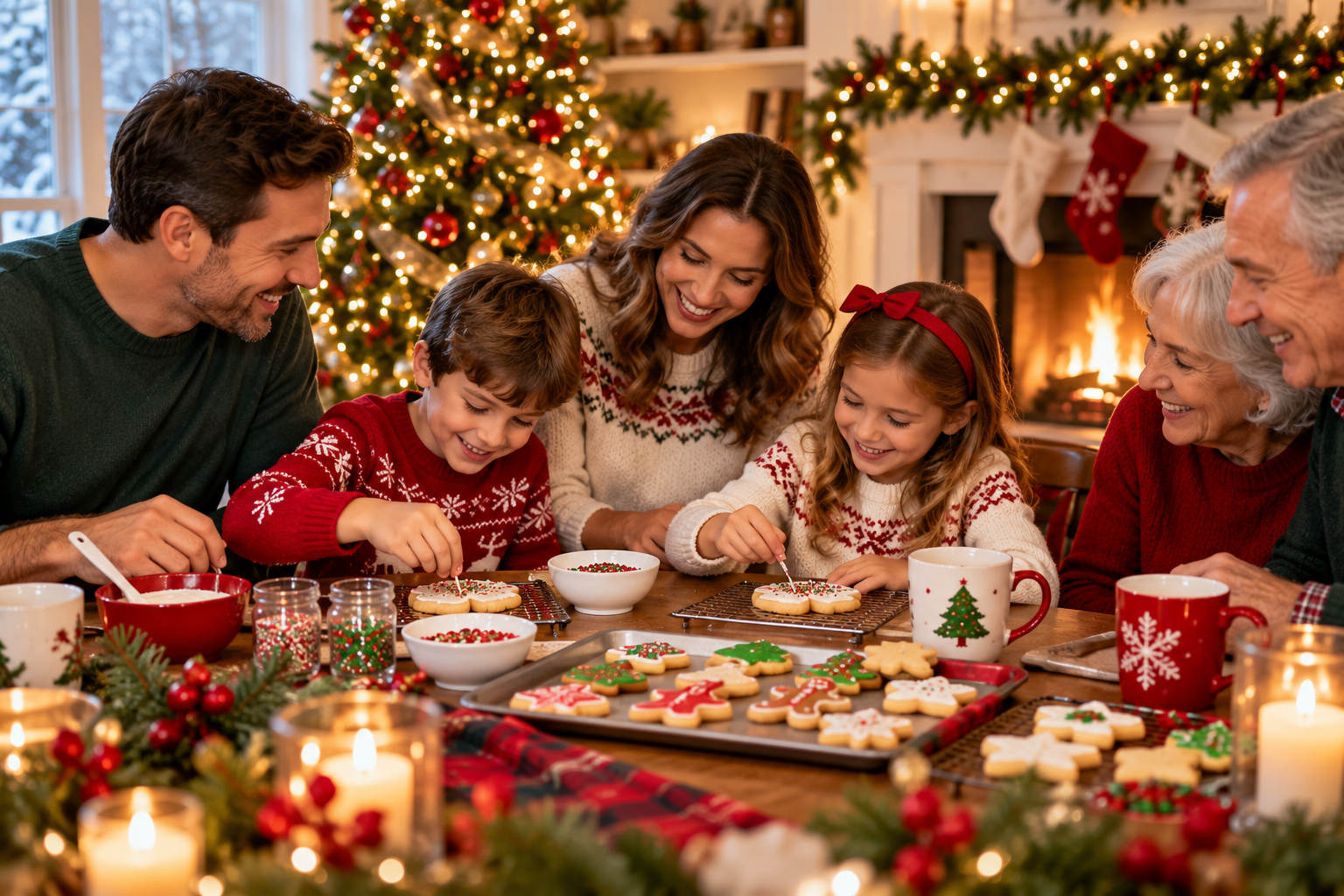
Family traditions have excellent public relations. We picture candlelight. Holiday dinners. Matching pajamas.
Children eagerly participating in beloved rituals that will one day be described to their own children in glowing detail.
We don't generally picture Mom standing in the kitchen saying:
“Would everyone PLEASE come decorate these cookies? This is our tradition.”
And yet. The funny thing about family traditions is that the best ones usually aren't the most elaborate.
They're the things you do repeatedly. The pancakes on birthdays. The first-night-of-vacation pizza. The ridiculous ornament everyone fights over.
The movie you watch every Christmas Eve even though everyone can recite half the dialogue.
Traditions don't need to be impressive. They need to belong to your family. And if you'd like to create some new ones, you don't need a grand plan.
You need something enjoyable enough that people want to do it again.
1. Start With What Your Family Already Does
Before inventing new traditions, look at the ones you already have. You may have traditions you don't even call traditions.
Maybe you:
- Order pizza on Friday nights
- Take a photo in the same place every vacation
- Make pancakes on birthdays
- Watch a particular movie every December
- Go for a walk after Thanksgiving dinner
- Let the birthday person choose dinner
- Make the same ridiculous joke every New Year's Eve
Those count. A tradition doesn't require a ceremonial name or matching napkins. It requires repetition and shared recognition.
If everyone says, “But we always do that,” congratulations. You have a tradition.
2. Don't Confuse Tradition With Production
A tradition can be extremely simple.
Hot chocolate after looking at Christmas lights.
That's a tradition. You do not need:
- Homemade cocoa bombs.
- Coordinated mugs.
- Personalized marshmallows.
- A hot-chocolate bar containing seven toppings.
A sign reading THE JOHNSON FAMILY HOT COCOA EXPERIENCE.
Unless you genuinely enjoy all that. Then go wild. But the tradition is the hot chocolate together. The rest is props.
3. Choose Something You Can Realistically Repeat
If you want a new ritual to become a tradition, ask:
Would I willingly do this again next year?
Better still:
Would I do this if I were tired, busy and slightly annoyed?
Because eventually you will be. A tradition requiring three days of preparation may have a short career. One requiring 20 minutes has much better odds.
Sustainability isn't only an environmental concept. It applies to gingerbread houses too.
4. Let Traditions Grow Instead of Announcing Them
You don't have to say:
“Starting today, this will be our new family tradition.”
That places quite a lot of pressure on Tuesday night. Just do something enjoyable. Then do it again. Eventually someone will ask:
“Are we doing that thing again this year?”
That's the moment. The tradition has appointed itself.
5. Build Traditions Around Things That Already Happen
The easiest traditions attach themselves to events already on the calendar. Think:
- Birthdays
- First day of school
- Last day of school
- Friday night
- Sunday morning
- Vacations
- Holidays
- Beginning of summer
- End of summer
- Moving day
- Anniversaries
You're not creating another event. You're giving an existing event a familiar ritual. This is far easier to maintain.
6. Let Food Do Some of the Work

Food is remarkably good at becoming tradition. Maybe your family has:
- Birthday breakfast
- Sunday dinner
- Taco Tuesday
- First-day-of-school dessert
- Christmas morning cinnamon rolls
- Thanksgiving pie
- Summer barbecue
- Movie-night popcorn
The food doesn't need to be complicated. In fact, familiar is part of the appeal. If your children someday say, “Mom always made that,” they will not add:
“Unfortunately, it only had four ingredients.” Memory has no minimum ingredient requirement.
7. Give the Birthday Person Some Power
Birthdays are perfect for easy traditions. Let the birthday person choose:
- Dinner
- Dessert
- Family activity
- Movie
- Breakfast
Or create a special birthday plate, birthday banner or morning ritual. The point is not to create a magazine-worthy birthday. It's to make the person feel:
Today is recognizably different because it's your day.
That's what traditions do well.
8. Create a First-Day-of-School Tradition
School-year traditions can be tiny.
Try:
- Same breakfast every first day
- Front-door photo
- Note in lunch
- Special after-school snack
- Dinner where everyone tells one story from the day
You don't need a customized chalkboard containing the child's height, teacher, career aspirations and current favorite vegetable.
Take a picture. Get them to school. You've already accomplished quite a bit.
9. Create an End-of-School Tradition Too
The last day deserves recognition. Maybe:
- Ice cream after school
- Backyard dinner
- Family swim
- Favorite restaurant
- Kids choose the evening
The transition itself is what matters.
School is over. Summer begins.
Traditions help families mark time. That's one reason seemingly small rituals can become surprisingly important.
10. Give Friday Night an Identity
A weekly tradition can be easier to maintain than an annual one because you get more chances.
Friday might become:
- Pizza night
- Movie night
- Game night
- Takeout night
- Dessert night
Don't make it complicated. The entire attraction may be that nobody has to decide what happens Friday. Decision fatigue gets the night off too.
11. Use Traditions to Mark the Seasons
Seasonal changes offer easy opportunities.
Spring
Plant something together.
Summer
First picnic or beach day.
Fall
Make a favorite meal or visit somewhere outdoors.
Winter
Hot chocolate and a movie.
These don't need to become elaborate seasonal festivals. You're simply noticing:
We're here again.
That repetition gives family life rhythm.
12. Create Traditions Around Travel
Vacations are fertile ground for rituals.
Maybe you:
- Take the same first-day photo
- Buy one ornament
- Eat the first meal at a familiar place
- Let each person choose one activity
- Keep a running family travel journal
- Take one deliberately ridiculous photo
Try not to turn souvenir collecting into a storage problem. One small meaningful object can be enough.
Your house doesn't need physical evidence from every gift shop you've entered since 2008.
13. Make One Holiday Non-Negotiable

Holidays can become overloaded with traditions. Instead of trying to preserve everything, identify the one or two rituals your family truly loves.
Maybe Christmas Eve means:
- One particular meal
- Church
- A movie
- Driving to see lights
- Opening one gift
- Reading the same book
- Sitting around doing almost nothing
Protect those. Everything else can flex. A tradition becomes meaningful partly because it survives changing circumstances.
It does not need 14 supporting traditions. These easy Christmas holiday tips can help.
14. Let Children Participate, Not Just Observe
Children remember traditions more strongly when they have a role. Let them:
- Stir
- Decorate
- Choose
- Set up
- Read
- Carry
- Light an appropriate flameless candle
- Pick the music
- Make part of the meal
Yes, involving children can make something take longer. That's because you aren't simply completing a task. See household chores for kids by age.
You're transferring the ritual. Efficiency is not always the objective.See holiday entertaining with kids for getting started ideas.
15. Give Older Children Better Jobs
Traditions should grow as children grow. A six-year-old might decorate cookies. A 16-year-old might make them.
A teenager might:
- Cook part of dinner
- Choose the movie
- Plan an outing
- Take the annual photo
- Drive everyone somewhere when appropriate
If a family tradition still treats a 17-year-old exactly as it did when they were seven, don't be shocked if enthusiasm declines.
Let ownership evolve. Keep it age appropriate with these kids house chores by age.
16. Don't Force Sentiment
This is important. You may adore a tradition that your children merely tolerate. That's okay.
But if everyone hates it, reconsider. A family tradition shouldn't become an annual loyalty test.
Ask: Do we still enjoy this?
If yes, continue. If no, change it. If nobody remembers it until you remind them, that is also useful information.
Tradition does not mean mandatory forever.
17. Let Traditions Retire
Families change. Children grow. People move. Relationships change. Schedules change.
A tradition that worked beautifully for ten years may stop working. Let it go. You are not erasing those ten years. They already happened.
This is one of the odd traps of tradition: we sometimes believe stopping a ritual somehow diminishes the memories attached to it.
It doesn't. The memory doesn't disappear because you stopped making the casserole.
18. Adapt Traditions When Life Changes
Maybe the whole family can no longer gather on Christmas Day. Move the gathering.
Maybe adult children live far away. Create a shared video call or another ritual that fits.
Maybe grandparents can't travel. Bring part of the tradition to them. Maybe the family has grown too large for one dining table. Change the format.
Traditions survive because they adapt. Rigid rituals eventually collide with real life. Real life usually wins.
19. Include New Family Members
Marriage, partnership, birth, adoption and blended families bring existing traditions together. Make room.
Ask new family members:
What did your family always do?
Maybe something from their childhood becomes part of the new family's rhythm.
You don't have to choose one family's traditions and discard the other's. But you also don't need to preserve every tradition from both sides.
Otherwise Christmas Eve becomes a 14-hour cultural merger. Pick what works. Create something new together.
20. Don't Make One Person Responsible for All the Magic
This happens constantly. One person:
- Remembers the tradition.
- Buys everything.
- Prepares everything.
- Gets everyone together.
- Takes the pictures.
- Cleans everything afterward.
Then everyone fondly remembers the “family tradition.”
If a tradition belongs to the family, let the family help create it. Assign jobs. Let other people take ownership. See house chores for kids by age.
Magic is substantially less magical for the person washing all the dishes.
21. Create a Tradition That Involves Helping Someone Else
Not every family ritual has to center on the family itself. You might:
- Donate toys
- Volunteer
- Prepare food for someone
- Shop for a giving program
- Help a neighbor
- Support a cause together
Choose something appropriate to your children's ages and your family's circumstances. And keep the focus on helping rather than turning generosity into a performance.
The tradition is participation. Not documenting how charitable everyone looked.
22. Make Everyday Traditions Count
Some of the most meaningful traditions have nothing to do with holidays.
Maybe your family:
- Eats Sunday breakfast together
- Walks after dinner
- Calls grandparents on Sundays
- Makes pancakes when someone has a bad day
- Plays cards on vacation
- Gets takeout after a long trip home
These rituals may never appear in a family scrapbook. They may nevertheless be the things your children remember most.
Ordinary repetition has tremendous memory-making power.
23. Create a Family Saying or Running Joke
Not every tradition is an activity. Families accumulate:
- Phrases
- Nicknames
- Stories
- Jokes
- Songs
- Ridiculous references outsiders don't understand
These become part of family identity. You don't need to deliberately manufacture them. Just notice them. Repeat the good ones.
Twenty years later, one sentence may make an entire table laugh. Nobody else will understand why. Perfect.
24. Take the Same Photo
This is one tradition worth making easy. Take the same general photo each year:
- Children by the front door on the first school day
- Family by the Christmas tree
- Same vacation location
- Birthday person in the same chair
- Everyone on Thanksgiving
Don't obsess over recreating the exact angle. The magic happens later, when you see the sequence.
The background changes. People grow. Hair choices are made and later regretted.
Time becomes visible.
25. Keep the Documentation Simple
You don't need to document every tradition extensively. Take a few photos. Write down a funny comment occasionally.
Keep a short family journal if you enjoy it. But don't spend the entire tradition documenting the tradition.
If everyone has to wait while you take 46 photographs of the cookies, you are no longer making cookies.
You're producing cookie content. Take the picture. Then eat one.
26. Don't Turn Traditions Into Clutter
Traditions often produce objects.
- Ornaments.
- Souvenirs.
- Crafts.
- Cards.
- School memorabilia.
- Keepsakes.
Be selective. The memory doesn't require keeping every physical object associated with it. Keep the meaningful things.
Photograph something if that's enough. Let ordinary materials go.
Your child's memory of baking Christmas cookies is not stored inside the plastic cookie cutter. You can replace a cookie cutter.
Childhood remains intact.
27. Repeat More Than You Reinvent
If your goal is tradition, repetition is an advantage. You don't need a new:
Christmas activity. Birthday theme. Vacation ritual. Summer bucket list. Every year. Do the same good thing again.
Modern life encourages us to constantly create new experiences.
Family tradition works almost exactly the opposite way. Its power comes from familiarity.
28. Allow Traditions to Be Imperfect
The cake may collapse. It may rain on the picnic. Someone may cry during the Christmas movie.
The restaurant may close. The turkey may take two hours longer than expected. Do not confuse imperfection with failure.
Sometimes the disaster becomes the tradition's best story.
Families have been known to remember the year the dog stole the ham far longer than the year dinner was flawless.
Perfection is surprisingly forgettable.
29. Ask Your Family What They Remember
Here's an excellent exercise. Ask:
What family traditions do you remember most?
Don't prompt them. Listen.
You may discover that the thing you spent enormous effort creating barely registered.
Meanwhile, they passionately remember eating cereal in bed on birthdays. This is useful.
Family traditions should be designed around the family you actually have—not the imaginary family featured in your head.
30. Keep the Traditions That Still Earn Their Place
Once a year, mentally review your traditions.Ask:
- Do we enjoy this?
- Does it still fit our family?
- Is the effort worth it?
- Would anyone miss it?
- Can someone else take responsibility for it?
- Does it need to change?
Keep what works. Adapt what almost works. Retire what doesn't.
Then leave room for new traditions to emerge naturally. Family life keeps changing. Your traditions can too.
20 Simple Family Tradition Ideas
Need somewhere to start?
Try one of these:
- Birthday-person-chosen dinner
- Pancakes on birthday mornings
- Friday pizza night
- Sunday family dinner
- First-day-of-school photo
- Last-day-of-school ice cream
- First swim of summer
- Annual family picnic
- Same vacation photo each year
- One vacation ornament or small souvenir
- Christmas-light drive
- Christmas Eve movie
- Holiday baking afternoon
- New Year's Day breakfast
- Thanksgiving walk
- Family game night
- Annual volunteer activity
- Sunday call to distant relatives
- Special meal after returning from vacation
- Everyone chooses one activity on family trips
Notice what's missing? A laminator. A craft-store emergency. A 14-step tutorial.
Traditions don't need production value.
Family Traditions for Young Children
Young children respond particularly well to predictability.
Keep traditions:
- Short
- Concrete
- Participatory
- Easy to recognize
Examples:
Birthday: special breakfast.
Friday: movie and popcorn.
Christmas: read the same book.
Summer: first popsicle outside.
Vacation: child chooses one activity.
Young children don't need elaborate symbolism. They need repetition. Do it again and it becomes theirs.
Family Traditions With Teenagers
Teenagers may be less enthusiastic about traditions designed for little children.
That's not necessarily rejection of the family. The tradition may simply need to grow.
Let teenagers:
- Choose the restaurant
- Cook a holiday dish
- Control the playlist
- Plan part of an outing
- Invite a friend when appropriate
- Drive if appropriate
- Take over a tradition themselves
And don't force participation in every ritual. Sometimes giving teenagers room makes them more willing to join the traditions that actually matter.
Nothing makes an activity less festive than compulsory merriment.
When Adult Children Come Home
Family traditions get interesting when children become adults. They have:
- Jobs.
- Partners.
- Children.
- Other families.
- Other traditions.
Possibly airline schedules. The old assumption that everyone will always be in the same house at the same time may no longer work.
Keep the heart of the tradition and loosen the logistics. Christmas dinner can happen December 23.
Birthday breakfast can become birthday brunch. The annual outing can move. Tradition is repetition with meaning. It is not strict adherence to a timestamp.
Starting Traditions in a Blended Family
Don't rush to manufacture instant family history. Let everyone bring something.
Ask each person:
What's one tradition you'd like to keep?
Then choose a few.
Also create something genuinely new that belongs to the family you're forming now. It doesn't have to be profound.
Maybe it's: Saturday breakfast. A holiday movie. Birthday dinner. Summer trip.
The new tradition gains meaning through repetition. You cannot accelerate that process by declaring it meaningful. Time handles that part.
Family Traditions When Money Is Tight
Traditions do not need money. Some of the easiest cost little or nothing:
- Walk to see holiday lights
- Family movie night at home
- Birthday breakfast
- Picnic
- Board game
- Annual photo
- Favorite homemade meal
- First-day-of-summer trip to the park
- Family hike
- Story night
Children generally don't calculate the retail value of a tradition. They notice: We always do this together.
That's the important part.
How to Start a New Family Tradition
Use this simple formula:
Pick an existing occasion.
Birthday, Friday, Christmas Eve, first day of summer.
Add one repeatable thing.
Special breakfast, movie, walk, photo.
Involve other people.
Give everyone a role or choice.
Keep it easy.
If it's exhausting, simplify it.
Repeat it.
This is the step that transforms an activity into a tradition. You don't need to declare it. Just do it again.
The Five Rules of Family Traditions
If you remember nothing else:
1. Keep them simple enough to repeat.
Complicated traditions have poor survival rates.
2. Let everyone participate.
Family traditions shouldn't be produced by one person for everyone else.
3. Allow them to change.
Families aren't static.
4. Retire traditions that no longer work.
Past meaning doesn't create a future obligation.
5. Repeat what people love.
Familiarity is the entire point.
Your Family Tradition Audit
Once a year, ask everyone:
Keep
What do we definitely want to do again?
Change
What do we like but want to simplify?
Drop
What feels like work nobody enjoys?
Add
Is there one thing we'd like to try?
That's enough. You don't need 30 family traditions.
A handful of rituals repeated over years will carry far more meaning than an enormous annual activity schedule.
The Tradition Test
Before adding a new tradition, ask:
- Do we actually enjoy this?
- Can we realistically repeat it?
- Can more than one person help?
- Does it fit our family now?
- Does it require storing more stuff?
- Would we still do it without taking pictures?
- Is this adding meaning—or just another obligation?
That last question is the important one. Because family life already contains plenty of obligations.
Tradition should be one of the things that gives something back.
The Bottom Line
You can't manufacture nostalgia in advance. You can only create the conditions for it.Do something together.
Keep it simple. Do it again.
Let everyone participate. Laugh when it goes wrong. Change it when the family changes. Retire it when its time has passed.
Years later, someone may say:
“Remember how we always used to...?”
That's when you'll know which things became traditions.
And there's a good chance it won't be the activity you spent the most money on or the one you planned most carefully.
It may be pizza on Friday. The same Christmas movie. Pancakes on birthdays.
The ridiculous photo everyone complained about taking.That's the peculiar thing about family traditions. You don't always know you're creating one while you're doing it.
Sometimes you're just living your life. Then you do the same thing again. And eventually, it becomes part of the story.
Keep Going
For more ideas about making home life work with children, see Family Life.
If you'd like children to participate more in maintaining the home, see Teaching Kids Household Chores and Household Chores for Kids by Age.
And for keeping Christmas traditions enjoyable instead of turning December into a marathon, see Easy Christmas Holiday Tips.
- Clean Home
- Family Life
- Create Family Traditions