Sleepover Rules for Success:
A Parent's Survival Guide

Your child wants to have a sleepover.
Just a few friends, they promise. They'll be quiet. They'll go to bed at a reasonable hour. They'll clean everything up in the morning.
And you, being an experienced adult, know that at least two of those promises are complete fiction.
Still, sleepovers can be wonderful. Kids get to spend time with friends, build independence, and create memories that don't involve staring at a screen.
The secret to a successful sleepover? Set a few clear rules before the first sleeping bag hits the floor.
You don't need to run a military operation. But a little planning can prevent the evening from turning into a midnight circus.
1. Keep the Guest List Manageable
More kids doesn't automatically mean more fun. Sometimes it just means more noise, more spilled juice, and more people arguing over which movie to watch.
For younger children, two or three guests may be plenty. Older kids may be comfortable with a slightly larger group.
Consider your child's age, your available space, and how many children you can reasonably supervise. And remember: You're not obligated to invite the entire class.
2. Talk to Parents Before the Sleepover
Before anyone arrives, check in with each child's parent or guardian.
Confirm:
- Drop-off and pickup times
- Emergency contact numbers
- Food allergies or dietary restrictions
- Medications and relevant medical needs
- Any bedtime routines or concerns
- Whether the child is comfortable staying overnight
Make sure you know who to contact if a child becomes sick, upset, or simply wants to go home. It's also helpful to tell parents which adults will be present and how the children will be supervised.
3. Establish the House Rules Early
Gather everyone together shortly after arrival and explain the basic rules. Keep them short enough that the kids will actually remember them.
Our Sleepover Rules
- Stay inside the approved areas of the house.
- No leaving the house or yard without permission.
- Respect other people's belongings and personal space.
- No teasing, bullying, or embarrassing pranks.
- Ask before taking photos or videos.
- Follow the household's screen-time rules.
- Keep food and drinks in designated areas.
- Tell an adult if something feels wrong or uncomfortable.
Make it clear that everyone has the right to say no to a game, activity, or physical contact.
And nobody should be pressured into sharing secrets, participating in dares, or doing anything that makes them uncomfortable. The goal is fun, not a reality television competition.
4. Plan a Few Activities
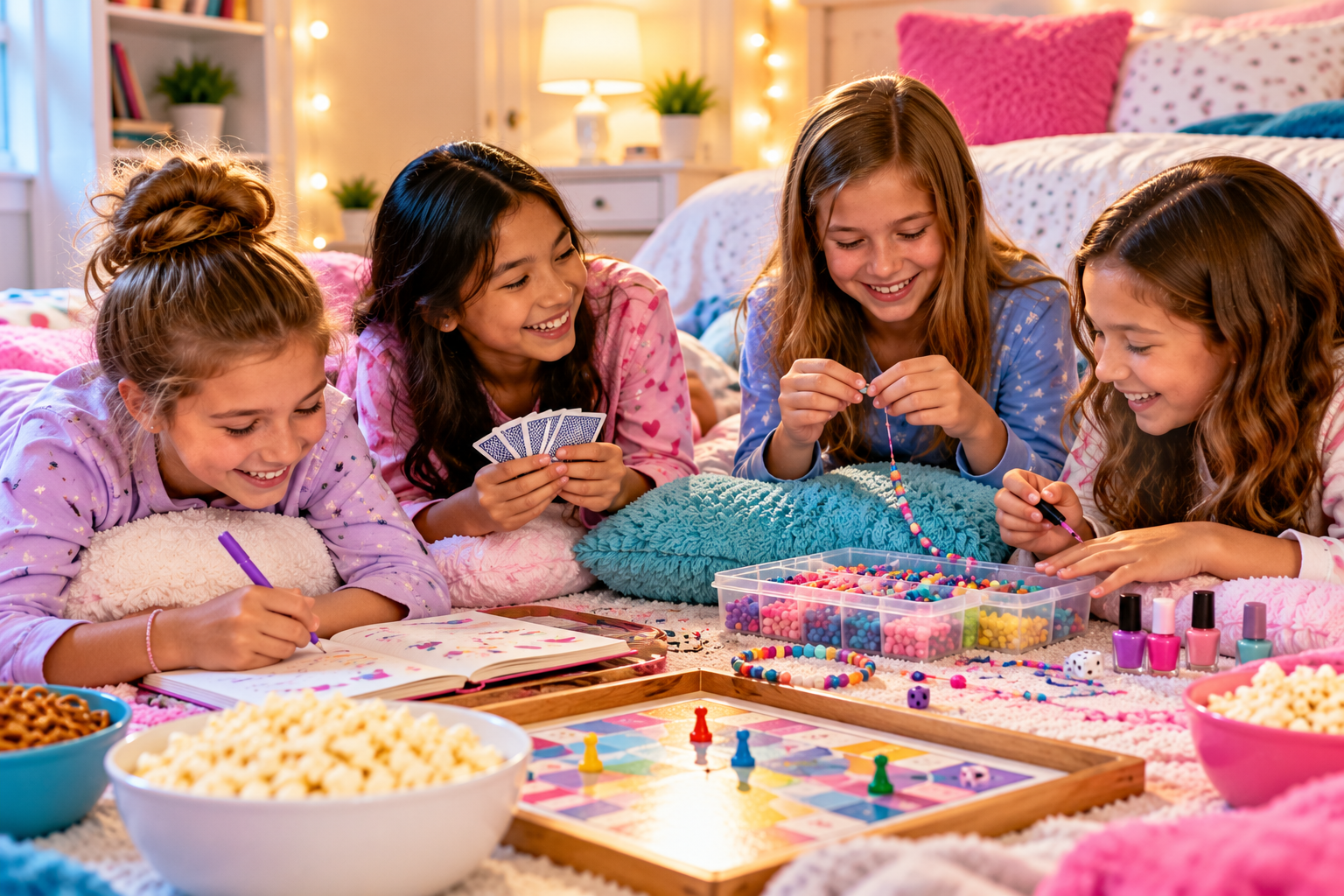
You don't need to schedule every minute. In fact, overscheduling a sleepover is a great way to make everyone cranky before bedtime.
But having a few activities ready helps avoid the dreaded chorus of "We're bored!"
Try:
- A movie night with popcorn
- Board games or card games
- Simple crafts
- A build-your-own pizza dinner
- Karaoke
- A scavenger hunt
- A pancake breakfast the next morning
Choose activities appropriate for the children's ages and supervise anything involving cooking, sharp tools, or other hazards.
Leave room for free play, too. Sometimes the kids just want to talk. Preferably at a volume normally reserved for sporting events.
5. Set Rules for Phones and Screens
Phones can turn a perfectly good sleepover into six children sitting silently in a circle, each watching something different. Decide on screen rules before the evening begins.
You might establish:
- A specific time for putting phones away
- No posting photos or videos without permission
- No prank calls or inappropriate messages
- No accessing age-inappropriate content
- No recording anyone while they're sleeping
Children should still be able to contact their parents whenever they need to. Explain the rules to parents beforehand so there are no surprises.
6. Keep Snacks Simple
Sleepover food doesn't have to be fancy. Pizza, sandwiches, fruit, popcorn, and a few treats are usually enough.
Just remember to check for allergies and dietary restrictions first.
Set up a snack station where kids can help themselves to approved foods and water. And establish one useful rule: No food or drinks in sleeping bags.
Because discovering a crushed chocolate cookie inside a sleeping bag at 7 a.m. is nobody's idea of a good morning.
7. Establish a Reasonable Bedtime
Will everyone actually fall asleep at the designated bedtime? Probably not. But setting a lights-out time gives the evening some structure.
For younger children, plan an earlier wind-down period. Older kids may stay awake longer, depending on your household rules and their parents' expectations.
Start with quieter activities, lower the lights, and put away noisy games. You can allow some whispering after lights-out.
Just explain that whispering should not be audible from the next county.
8. Prepare a Comfortable Sleeping Area
Before guests arrive, make sure everyone has an appropriate place to sleep. Provide enough space for sleeping bags, pillows, blankets, and personal belongings.
Keep walkways clear, especially if children will need to use the bathroom during the night. A small night-light can help younger guests feel more comfortable.
Let everyone know where the bathroom is and how to find an adult if they need help.
And don't forget to establish boundaries about bedrooms or other areas that are off-limits.
9. Have a Plan for Homesickness
Even children who are excited about a sleepover can suddenly miss home. It often happens right around bedtime, when the games are over and the house gets quiet.
If a child becomes homesick:
- Listen calmly and offer reassurance.
- Ask what would help them feel comfortable.
- Let them contact their parent or guardian.
- Respect their decision if they want to go home.
Don't pressure a child to stay or make them feel embarrassed. Sometimes the bravest thing a child can do is admit they're ready for their own bed.
10. Supervise Without Hovering
Kids need room to enjoy themselves, but sleepovers still require adult supervision. Check in regularly, especially with younger children.
Be alert for disagreements, exclusion, bullying, or unsafe behavior. Keep doors and access to outdoor areas secure, and make sure children know how to reach you.
A sleepover isn't an opportunity for parents to disappear until breakfast.
11. Make Morning Cleanup Part of the Plan
Here's a rule worth establishing before the guests arrive:
Everyone helps clean up before going home.
That means:
- Rolling up sleeping bags
- Gathering personal belongings
- Throwing away trash
- Returning games and supplies
- Taking dishes to the kitchen
- Checking for forgotten socks, chargers, and stuffed animals
Keep cleanup age-appropriate and brief.
You hosted a sleepover, not a housekeeping retreat. But there's no reason you should spend the entire afternoon cleaning up after everyone.
12. End the Sleepover on Time
Set a pickup time and communicate it clearly to parents. A sleepover that ends at 10 a.m. is much easier to manage than one that mysteriously extends until late afternoon.
Have everyone pack up before pickup begins. A simple breakfast, a little cleanup, and a cheerful goodbye are all you need.
Then you can reclaim your living room. And possibly take a nap.
Keep Going
Successful sleepovers aren't about elaborate decorations, expensive activities, or providing enough snacks to feed a small army.
They're about helping kids have fun while keeping everyone safe, comfortable, and included.
Set the rules ahead of time, communicate with parents, and give children enough structure to enjoy themselves without turning your home upside down.
For more family-friendly ideas, explore:
- Getting Kids to Clean: Make household chores less of a battle.
- Easy Pets for Kids: Find a family pet that fits your household.
- Home Safety Checklist: Simple ways to make your home safer for everyone.
With a little preparation, your child's sleepover can become a happy memory.
And if everyone gets at least a few hours of sleep? Consider that a bonus.
- Clean Home
- Family Life
- Sleepover Success Tips
Free 15-Minute Daily Reset Checklist
Get Notes on Keeping House
Fifteen minutes a day. No weekend cleaning marathons. No guilt. Sign up for my newsletter and I'll send you the printable checklist that makes it happen.
Send My ChecklistNo spam, ever. Unsubscribe anytime.

Free Printable
Notes on Keeping House
Sign up and get my 15-Minute Daily Reset Checklist. One timer, five zones, and a house that stays under control.
Send My ChecklistNo spam, ever. Just smart, funny tips for keeping house from Tara Aronson.