Holiday Travel Safety Tips:
25 Ways to Make the Trip
Easier and Safer
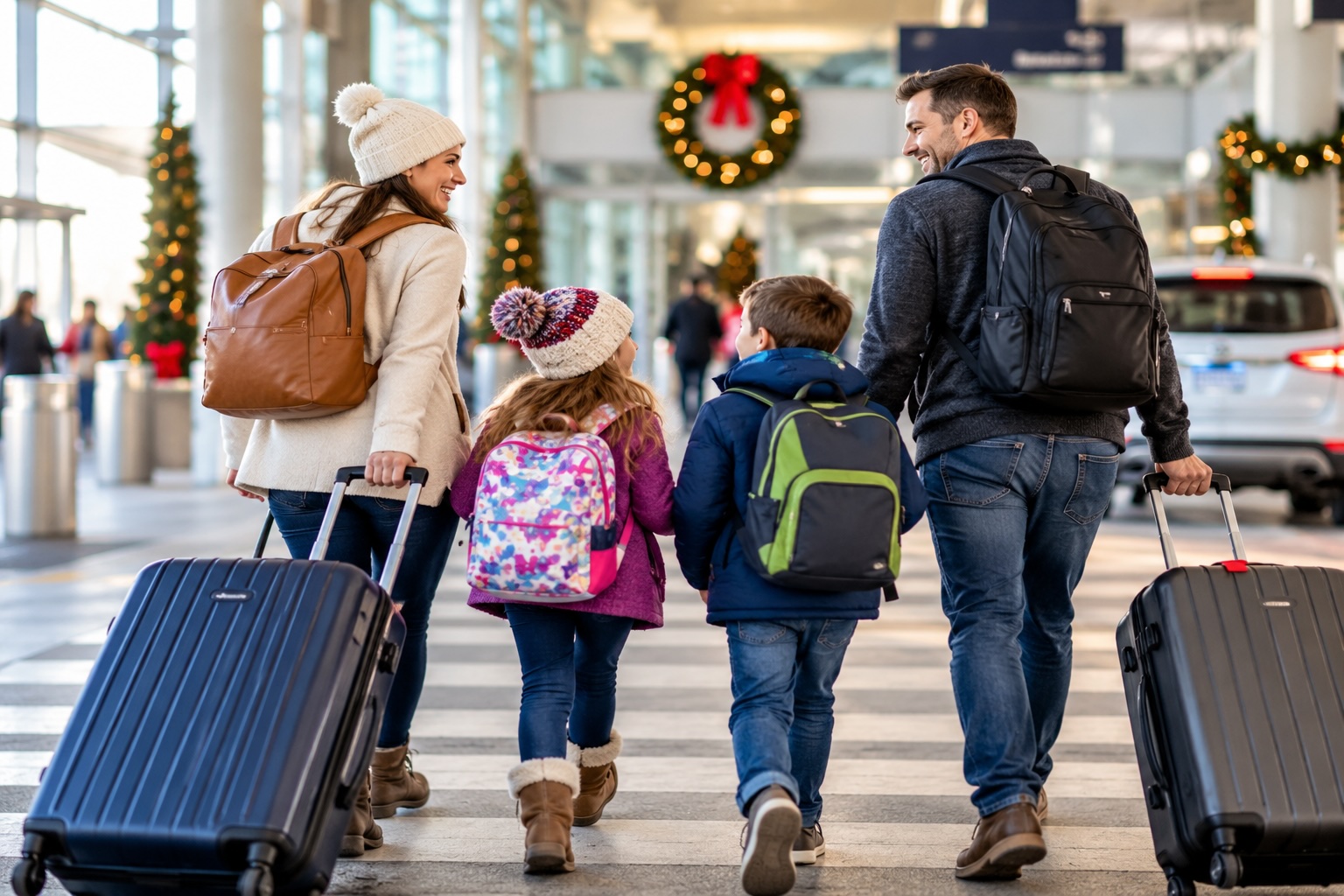
Holiday travel has a special ability to turn otherwise reasonable people into mobile logistics departments.
You aren't simply leaving the house. You're transporting:
- Suitcases.
- Gifts.
- Coats.
- Chargers.
- Children.
- Snacks.
- Possibly a pet.
And approximately 40 percent more stuff than the vehicle was designed to hold. Then millions of other people have the same idea.
Holiday travel doesn't have to be miserable, but it does benefit from a little preparation—particularly when winter weather, busy roads and airports, tired drivers and excited children join the trip.
The goal isn't to anticipate every possible problem.
It's to eliminate the preventable ones.
Here are 25 ways to make holiday travel safer and considerably less chaotic.
1. Check the Weather Before You Leave
Not yesterday. Not when you packed. Before you actually leave.
Check the forecast for:
- Your starting point
- Your destination
- The route in between
Winter conditions can change quickly.
If authorities advise against travel because conditions are dangerous, take that seriously. Ready.gov recommends avoiding road travel when severe winter weather makes driving hazardous.
Christmas dinner can wait. The mashed potatoes will recover emotionally.
2. Give Yourself More Time Than You Think You Need
Holiday traffic is holiday traffic. Airports are crowded. Parking takes longer.
Security lines happen. Weather happens. Children announce bathroom emergencies at precisely the wrong moment.
Build extra time into the trip. Rushing doesn't make any of these things safer.
It just means you're experiencing them while angry.
3. Don't Drive Tired
A long holiday drive after a full workday may look efficient on the calendar. Your body may disagree. If you're tired, stop.
Switch drivers if there's another qualified, rested driver available. Take breaks on long trips.
Don't rely on coffee, loud music, or an open window to transform serious fatigue into alert driving.
Arriving later is considerably better than pushing yourself beyond what you can safely manage.
4. Everyone Buckles Up
Every trip. Every passenger. Even when:
“It's only five minutes.”
“We're just going down the street.”
“The kids are asleep.”
Seat belts aren't optional because it's Christmas. For safety’s sake, make sure everyone is buckled up before the vehicle moves
5. Check Children's Car Seats Before the Trip
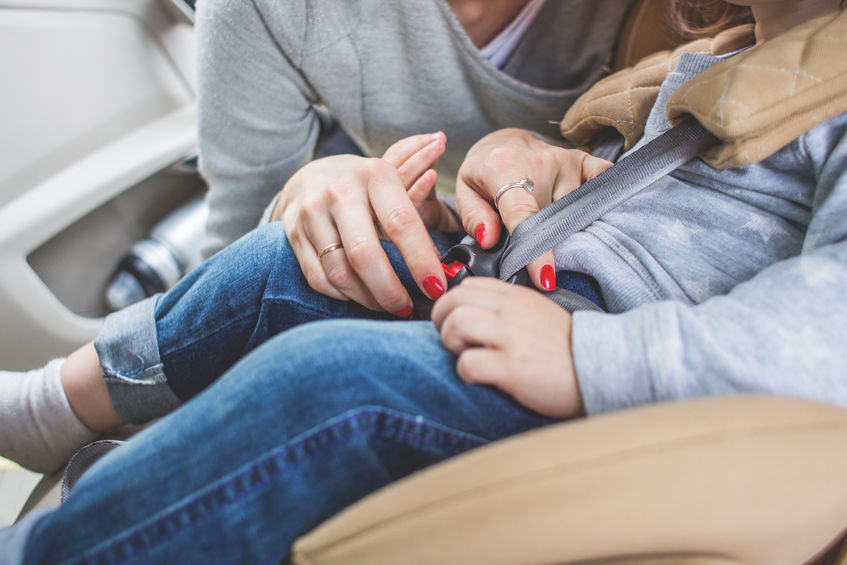
Make sure each child is using the appropriate car seat, booster, or seat belt for their age and size, and that the restraint is properly installed and used.
Do this before departure day.
The morning of a 400-mile drive is not the ideal time to stand in the driveway holding an instruction manual while everyone else asks whether you're ready yet.
6. Put the Phone Away While Driving
Set up what you need before moving:
- Navigation
- Music
- Podcast
- Destination
- Important calls
Then drive. If something needs your attention, have a passenger handle it or pull over safely.
The group text about whether Aunt Carol needs more ice isn't more important than the road. Aunt Carol will locate ice.
7. Have a Sober-Driving Plan
If alcohol or other impairing substances are part of the holiday gathering, decide beforehand who is driving.
Driving impaired by alcohol or other drugs is dangerous and illegal, of course. Not to mention expensive. And exceedingly inconvenient.
Options include:
- Designated sober driver
- Rideshare
- Taxi
- Public transportation
- Staying overnight
Don't make the decision at the end of the evening when everyone's judgment has already joined the party.
8. Check the Car Before a Long Road Trip
Before a significant drive, give the vehicle some attention. Check:
- Tires
- Tire pressure
- Fuel or charge
- Lights
- Windshield wipers
- Washer fluid
- Battery condition
If you've noticed strange sounds or smells while driving lately, don't assume the car will respect Christmas and postpone the budding problem's fruition until January.
Machines have very poor holiday spirit.
9. Carry a Mobile Emergency Kit
Especially for winter road travel, keep useful emergency supplies in the vehicle.
Ready.gov recommends including:
- Jumper cables
- Flashlight
- Phone charger
- Warm clothing
- Blankets
- Water
- Nonperishable snacks
- Ice scraper
Depending on conditions and location, you may need additional winter supplies.
This isn't pessimism. It's the difference between an inconvenience and a much more uncomfortable inconvenience.
10. Don't Overload the Vehicle
Holiday gifts have volume. So does luggage. So do passengers. Pack thoughtfully and stay within your vehicle's limits.
Don't block the driver's visibility with luggage or gifts.
Secure heavier objects so they can't move around the passenger compartment during sudden stops. The stand mixer does not need a front-row seat.
11. Keep Essential Items Accessible
Don't bury everything you might need under six suitcases. Keep important items accessible, such as:
- Identification
- Wallet
- Phone
- Chargers
- Necessary medications
- Children's essentials
- Water
- Weather-appropriate clothing
- Important travel information
If you need something during the trip, you shouldn't have to unpack the vehicle on the shoulder of the freeway to find it.
12. Don't Put Essential Medication in an Inaccessible Bag
Bring necessary medication and keep it somewhere you can access easily during the trip.
For air travel, avoid putting critical items you may need during the journey somewhere you cannot reach during a flight.
Bring enough for the planned trip, and plan for reasonable contingencies for delays.
And if medication has special temperature, security, or transportation requirements, check those before departure.
Holiday delays don't ask whether your prescription schedule is convenient.
13. Give Children Their Own Travel Kit
Children do better when the trip doesn't depend entirely on adult entertainment services.
Pack age-appropriate:
- Snacks
- Water
- Books
- Games
- Headphones
- Comfort item
- Change of clothes for younger children
- Small activities
Keep the most useful items accessible.
Do not put every activity in the trunk and then act surprised when someone announces boredom seven minutes into a six-hour drive.
14. Plan Stops Before Children Force Them
For long drives, build in breaks. People of all ages need:
- Bathrooms
- Food
- Movement
- Fresh air
- A temporary change of scenery
Young children are particularly unlikely to appreciate your strategy of “making good time.”
They are not competing in a transportation efficiency contest.
15. Keep Pets Secure
If a pet is traveling with you, plan for the animal too.
Use an appropriate secure travel setup for the species and vehicle.
Bring:
- Food
- Water
- Medication
- Leash or other appropriate restraint
- Identification
- Waste supplies
- Familiar bedding or comfort items if useful
Don't let an unsecured pet roam around the driver's area.
A dog attempting to occupy the driver's lap at 65 mph is not a charming family travel moment.
16. Know Where Your Identification Is Before You Reach the Airport
Holiday airport rule: Don't wait until you're at the front of the line to start searching for identification.
Keep:
- ID
- Boarding information
- Necessary travel documents
somewhere secure and accessible.
Not:
Bottom of purse.
Inside gift bag.
Possibly in coat.
Maybe suitcase.
Definitely had it at home.
Give important documents one designated location.
17. Check Airline and Airport Security Rules Before Packing
Rules can change, and airlines can have their own requirements.
Before flying, check current requirements for:
- Baggage
- Carry-ons
- Restricted items
- Special equipment
- Batteries
- Gifts or unusual items you're transporting
Don't rely entirely on what was allowed the last time you flew.
18. Put Power Banks and Spare Lithium Batteries in Your Carry-On
This one is worth knowing before you pack.
FAA rules require you to carry spare lithium batteries—including power banks and portable chargers—in the aircraft cabin rather than in checked baggage.
Battery terminals should be protected against short circuits. If your carry-on is gate-checked, remove spare lithium batteries and power banks and keep them with you.
FAA rules also impose battery-size restrictions, and airlines may have additional limits, so check before traveling with larger batteries or unusual battery-powered equipment.
In other words: Don't lovingly pack the portable charger deep inside the checked suitcase and congratulate yourself on being organized. Wrong suitcase.
19. Don't Travel With a Damaged or Recalled Lithium Battery
If a battery or battery-powered device is damaged, defective or subject to a safety recall, don't simply throw it in your luggage and hope for the best.
FAA guidance restricts damaged or recalled lithium batteries and devices that present an overheating or fire hazard.
Check the specific item and airline requirements before traveling.
A swollen battery is not a holiday travel companion.
20. Protect Valuables and Important Documents
Don't make luggage a treasure chest. Keep important documents and valuables secured and with you.
Also avoid displaying large amounts of cash or leaving valuables visible in a parked vehicle.
And before leaving a hotel, rental, or relative's house, perform the famous final sweep:
Phone.
Wallet.
ID.
Keys.
Medication.
Chargers.
Children.
The order is flexible.
The final item is not.
21. Be Careful in Crowded Travel Areas
Airports, train stations, rest stops and tourist areas get especially busy around holidays.
Keep track of:
- Children
- Bags
- Phones
- Wallets
- Travel documents
Choose a meeting point with older children or other family members in case the group gets separated. And don't leave bags unattended.
Your carry-on does not need independent airport time.
22. Have a Family Separation Plan
If you're traveling with children, especially through crowded airports or stations, tell them what to do if they become separated from you.
Keep instructions age-appropriate.
For example:
- Stay in a safe visible location if appropriate.
- Find a uniformed employee or other designated safe adult.
- Know a parent's phone number if they're old enough.
- Have identifying/contact information available in an age-appropriate way.
Don't wait until somebody is missing to invent the family reunification strategy.
23. Prepare the House Before You Leave
Travel safety includes the house you're leaving behind.
Before departure:
- Lock doors and windows
- Turn off unnecessary appliances
- Deal with trash
- Check cooking appliances
- Secure pet arrangements
- Follow safe practices for holiday lights and decorations
- Make sure you haven't left candles burning
If you'll be away for an extended period, consider reasonable home-security measures appropriate to your situation.
The ideal holiday trip does not include the sentence:
“Did anybody turn off the stove?”
Twenty minutes after reaching the airport.
24. Accept That Delays Are Part of Holiday Travel
This may be the most useful holiday travel strategy. Something may go wrong. Traffic. Weather.
Delayed flight. Missing bag. Closed road. Tired child. Overbooked hotel.
Family member who insists you took the wrong exit despite having contributed nothing to navigation. Build some flexibility into the trip.
When safety or weather conditions require changing the plan, change the plan.
Getting there safely matters more than getting there precisely when you intended.
25. Holiday Road Trip Safety Checklist
Before leaving:
- Check weather
- Check route
- Check vehicle
- Fuel or charge vehicle
- Check tires
- Pack emergency kit
- Charge phones
- Bring chargers
- Pack water and snacks
- Bring necessary medications
- Check child restraints
- Secure pet if traveling
- Secure luggage
- Set navigation before driving
Then buckle everybody in.
Including the person who claims seat belts wrinkle their sweater. The sweater will survive.
Holiday Air Travel Checklist
Before heading to the airport:
- Check flight status
- Check airline baggage rules
- Check current security requirements
- Confirm identification/travel documents
- Keep medications accessible
- Charge devices
- Put power banks/spare lithium batteries in carry-on
- Protect battery terminals appropriately
- Keep valuables secure
- Pack child essentials where accessible
- Confirm pet arrangements if applicable
- Allow extra time
For unusual batteries, smart luggage or other battery-powered equipment, check the current FAA and airline requirements rather than guessing.
The Night-Before Travel Reset
Do yourself a favor.
Don't leave everything until morning.
The night before:
Put luggage by the door.
Not directly in the doorway.
We still need to leave the house.
Put travel clothes out.
Especially for children.
Charge electronics.
Phones.
Tablets.
Headphones.
Whatever you're bringing.
Put documents together.
ID.
Tickets or boarding information.
Necessary reservation details.
Pack snacks.
Do not depend entirely on finding exactly what everyone wants while traveling.
Check the weather again.
Then go to bed.
A rested traveler is considerably more useful than a perfectly packed traveler who stayed up until 2 a.m. reorganizing toiletries.
Traveling With Kids: The Sanity Kit
Keep one small bag accessible with things children are likely to need during the journey.
Depending on age:
- Snack
- Water
- Wipes
- Tissues
- Change of clothes
- Small activity
- Headphones
- Comfort item
- Necessary medication
Do not pack all useful children's items in the checked suitcase.
The airline cannot retrieve Teddy from the cargo hold because someone has reconsidered his importance.
Winter Road Travel: Don't Argue With the Weather
If you're driving into winter conditions, preparation matters.
Ready.gov recommends monitoring forecasts and carrying emergency vehicle supplies; during dangerous winter storms, officials may advise staying off the roads altogether.
If conditions deteriorate significantly:
Slow down.
Change your route if appropriate.
Stop somewhere safe if necessary.
Postpone the trip if that's the safer option.
The family may be disappointed.
That's preferable to the alternative.
Christmas is a date on the calendar.
It is not a court order.
If Your Flight Is Delayed
First:
Don't immediately catastrophize.
Check:
- Airline updates
- Gate information
- Connecting flight implications
- Rebooking options if needed
Keep essentials with you:
- Medication
- Charger
- Identification
- Water/snacks as permitted and available
- Children's necessities
And keep your phone charged.
The charger sitting comfortably inside your checked suitcase is not currently contributing to the team.
The 10-Minute Leaving-the-House Check
Before holiday travel, walk through once.
Kitchen
Stove and appropriate appliances checked.
Food handled.
Trash addressed.
Living areas
Candles out.
Holiday decorations appropriately managed.
Bathroom
No obvious problem waiting for your return.
Pets
Confirmed care or travel supplies.
Doors and windows
Secure.
People
Everyone present.
Travel essentials
Phone.
Wallet.
Keys.
ID.
Medication.
Luggage.
Then leave.
Do not circle the block and return because you suddenly can't remember whether you locked the door.
Check it deliberately the first time.
Your future brain will appreciate the evidence.
Five Things That Matter Most
If you ignore everything else in this article, remember these:
1. Don't rush in dangerous weather.
Plans can change.
2. Don't drive impaired or seriously fatigued.
Find another way.
3. Buckle everyone properly.
Every trip.
4. Keep essentials accessible.
Especially identification, medication, and chargers.
5. Give yourself more time.
Holiday travel becomes much easier when you don't treat every small delay as a crisis.
The Bottom Line
Holiday travel is complicated because we're trying to move many people and possessions during one of the busiest times of the year.
So simplify what you can.
Check the weather.
Prepare the car.
Pack an emergency kit for winter road travel.
Buckle everyone in.
Keep the driver focused and rested.
Know the current rules before flying.
Keep essential medications and documents accessible.
Put spare lithium batteries and power banks where aviation rules require them.
Give children something to do.
Secure pets.
And leave enough time that a traffic jam doesn't turn the entire trip into a family referendum on who insisted on leaving at 10:30.
You cannot control the traffic.
You cannot control the weather.
You definitely cannot control the airport.
You can control how prepared you are when you meet them.
And before you pull away from the house, perform one final head count.
Because after packing six suitcases, nine presents and three kinds of snacks, there is something humbling about realizing:
Grandma is still inside.
Keep Going
For making the house safer when everyone comes to you instead, see Holiday Safety Tips for Entertaining.
Traveling with children? Holiday Entertaining With Kids has more practical ideas for managing the kid side of the season.
For general year-round household safety, visit Home Safety.
And for simplifying the season before you leave, see Easy Christmas Holiday Tips.
- Clean Home
- Safe at Home
- Holiday Travel Safety Tips