Prevent Accidents At Home
To prevent accidents at home, you don't need to turn your home into a fortress. But there are some measures you'll want to take to minimize the chances of slips, falls, and more.
Are you expecting guests - perhaps a visit from Mom and Dad? Or are you getting ready to welcome some of your kids' friends over?
Before anyone crosses your threshold, consider this sobering statistic: Unintentional injury sends one of every four young children to the hospital each year.
Seniors and guests unfamiliar with your home's terrain are also at risk of home injuries.
How to Prevent Accidents at Home
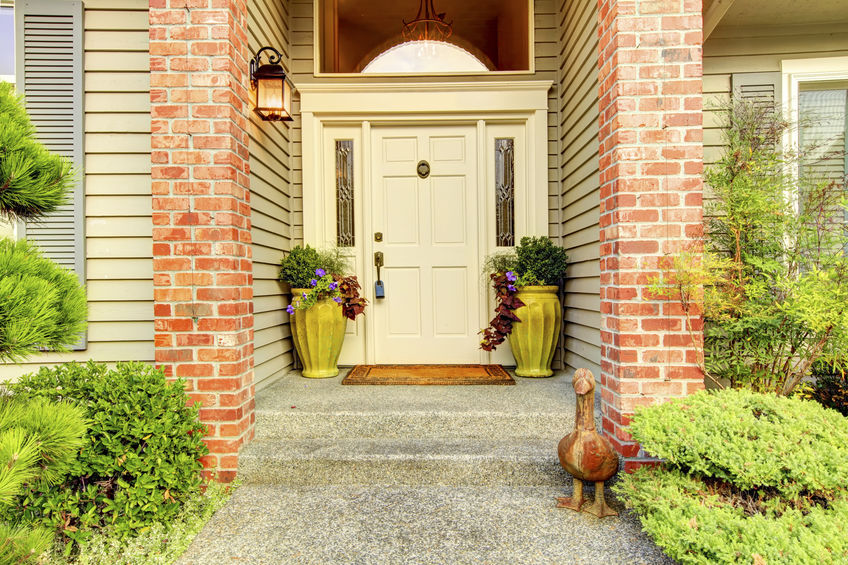
Make sure your house number is clearly visible. Regularly clear the sidewalks and porches around your home of kids' toys and anything else that might trip a visitor.
Make sure the entryway is well-lit. Even if you've removed any obstacles from the walkways, a well-lit entrance is key to preventing one of the most common home accidents— trips and falls. And visitors unfamiliar with the steps leading to your front door can easily trip without adequate lighting to guide them.
Prevent Accidents at Home on Stairs and Windows
- To prevent young children from falling down stairs, add gates that lock from the banister to the wall.
- Tie up drapery and mini-blind cords; they invite attention and pose a tripping or strangulation hazard to children.
- Remove interior doors not used for privacy; they can catch little fingers.
- Place stickers or colored tape on sliding glass doors to keep people from crashing into them.
Make sure the doors leading to hazardous rooms, such as the garage or cellar, and those leading outdoors have interior locks installed above the reach of young children to prevent them from wandering about.
Consider replacing interior doorknobs with lever-type handles. They're easier for kids and for those with impaired grip.
Living Area Safety to Prevent Accidents at Home
The living room and the family room are the natural gathering areas in any home. Look carefully around these rooms for any item within reach that a toddler could knock off its perch.
If you have a wobbly bookcase, fasten it securely to the wall so that a curious climber can't pull it down. (Added benefit: this is also a great way to prepare your home for earthquakes.)
Remove all furniture with sharp corners or other protrusions, or attach foam padding to the pointed parts. Make houseplants inaccessible to babies: Some plants are poisonous, and all have leaves that can pose a choking hazard.
Kitchen and Bathroom Safety
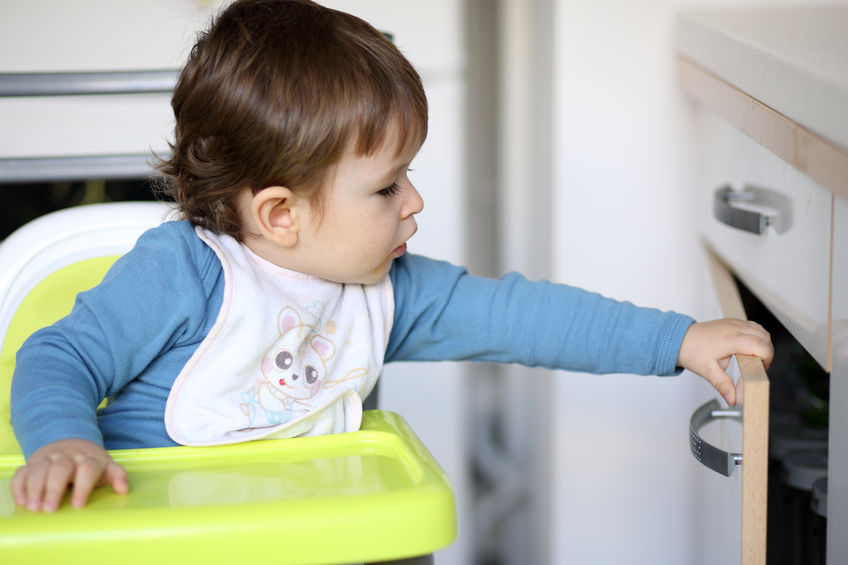
Since the kitchen contains a variety of sharp objects, chemicals, and choking hazards, you'll need to be especially vigilant.
In both the kitchen and bathrooms, use child-proof locks to secure cabinets containing cleaners. Do the same for drawers containing sharp tools.
Stow trash containers in a locked cabinet. If you have a gas stove, cover the knobs with inexpensive plastic sheaths so only you can turn on the gas.
Move refrigerator magnets out of a child's reach. If one of these breaks, its various parts could pose a choking hazard.
The bathroom is rife with danger. You can prevent injuries before they happen by placing a non-slip mat on the bathtub or shower floor. Pad the bathtub spout with an insulating cover that protects against bruising and scalding.
Finally, set your hot-water heater to a temperature no higher than 120 degrees F (49 °C). Clear everything from around the bathtub.
Close the toilet lid and the bathroom door after each use. Even an inch of water is enough to drown a small child.
If small children are only occasional visitors to your home, focus on securing a single room for them to use before they arrive. Remember, however, that there is no substitute for adult supervision.
- Clean Home
- Safe at Home
- Prevent Accidents At Home