15 Gardening Games for Kids That Make the Backyard More Fun
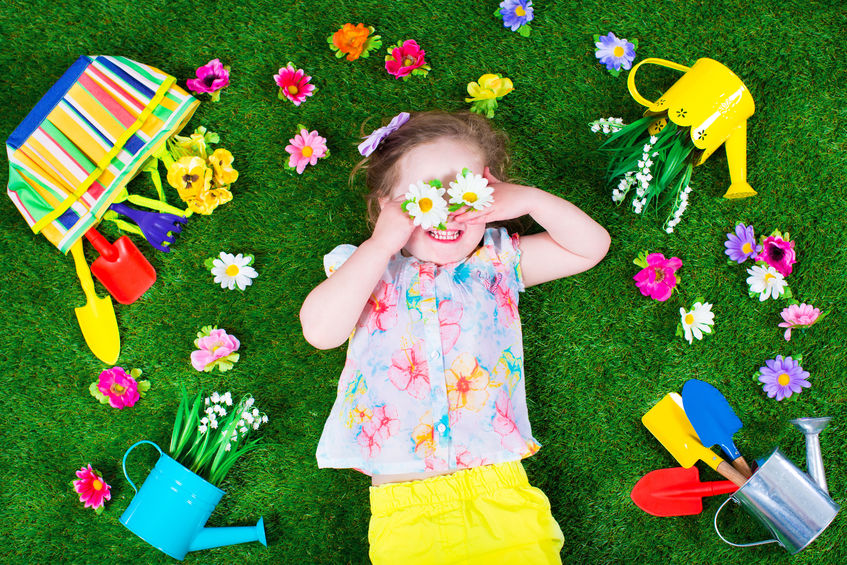
Tell a child you're going to spend Saturday gardening, and you may get a response normally reserved for news that the Wi-Fi is down.
Tell the same child there's a competition to find the weirdest bug in the backyard.
Suddenly we have volunteers.
Gardening with kids works better when it doesn't feel like disguised yard work.
They don't need an elaborate children's garden, miniature tools in coordinating colors, or twelve packets of educational worksheets.
They need something to find, plant, measure, chase, count, dig, water, or investigate.
And preferably permission to get dirty.
These garden games turn ordinary backyard jobs into activities children can actually enjoy—and sneak in a surprising amount of learning along the way.
Before You Start: Make the Garden Kid-Safe
Before sending children off on a backyard expedition, do a quick safety check.
Depending on your yard and the child's age, look for:
- Sharp garden tools
- Chemicals and pesticides
- Fertilizers
- Unfamiliar plants or berries
- Thorns
- Stinging insects
- Standing water
- Hot surfaces
- Animal waste
- Broken glass or other debris
- Irrigation equipment that could cause a trip
Teach children not to eat plants, berries, mushrooms or anything else they find unless a knowledgeable adult has specifically said it's safe to eat.
Young children need appropriate supervision, and garden tools should match the child's age and ability.
Then let them explore. A little dirt is sort of the point.
1. The Garden Scavenger Hunt
This is the easiest place to start because you need almost nothing.
Give each child a list of things to find.
Try:
- Something yellow
- A smooth rock
- A rough leaf
- A flower
- A feather
- Something that smells good
- A seed
- A twig shaped like a letter
- An insect
- Something smaller than a fingernail
- Something taller than the child
- Three different kinds of leaves
Children can check items off, photograph them or point them out rather than collecting them.
That's especially important for living things.
The objective is to explore the garden. Not dismantle it.
Make it harder for older kids
Instead of “find a flower,” try:
Find three different flower shapes.
Instead of “find an insect,” try:
Find an insect that's helping the garden.
Now you've turned ten minutes outside into an observation exercise without announcing that anything educational is happening.
Never reveal your methods.
2. Good Bug Detective
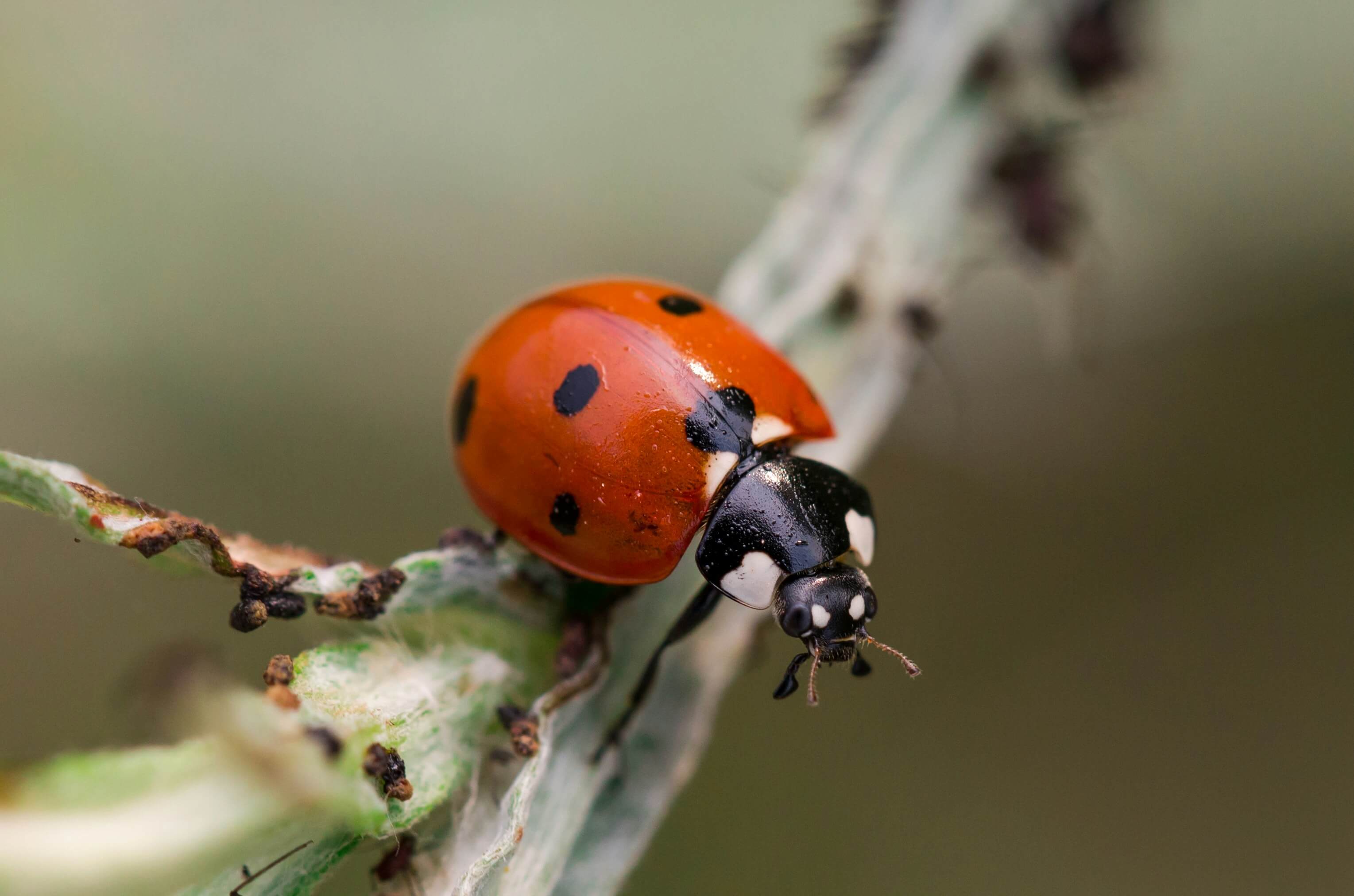
Not every bug in the garden is the enemy.
Give kids the job of finding insects and figuring out whether they're garden helpers, garden pests, or simply passing through.
They might encounter:
- Ladybugs
- Bees
- Lacewings
- Butterflies
- Aphids
- Beetles
- Caterpillars
- Wasps
- Other tiny backyard residents
Have children observe rather than handle unfamiliar insects.
Take pictures if you want to identify them later.
Then compare your discoveries with our Beneficial Garden Insects and Common Garden Pests guides.
This is also an excellent way to stop children from assuming that every six-legged creature requires immediate execution.
Some of them are working for you.
3. The Five-Senses Garden Hunt
Ask children to find garden examples for their senses.
Something to see
A bright flower.
Something to hear
A bird, buzzing insect, or rustling leaves.
Something to smell
An herb or fragrant flower that you know is safe to smell.
Something to touch
A fuzzy leaf, rough bark, or smooth stone that's safe to handle.
For taste, don't let children sample the landscaping.
Instead, an adult can provide a known edible garden item such as an herb, berry, or vegetable that has been positively identified and is safe to eat.
The garden is an excellent classroom. It does not need to become a buffet of unidentified vegetation.
4. Seed Sorting Challenge
If you're planting seeds, let children investigate them first.
Put several types of seeds in separate containers.
Ask:
Which is biggest?
Which is smallest?
Which is darkest?
Which is roundest?
Which looks least like something capable of becoming a plant?
Then match the seeds to their packets.
Older children can predict which plant will emerge first or grow tallest.
Write down the predictions.
Later, see who was right.
This turns planting into an experiment instead of:
“Put this tiny thing in that hole and try not to lose it.”
5. The Seed-Growing Race
Choose two or more fast-growing plants appropriate for your climate and season.
Plant the seeds according to their instructions. Label them.
Then let children track:
- Date planted
- First sprout
- Height
- Number of leaves
- First flower, when applicable
Measure once or twice a week.
You can make a simple growth chart.
The winner doesn't necessarily have to be the tallest plant.
Award ridiculous titles instead:
First to Appear
Most Dramatic Growth Spurt
Best Hair
Plant Most Likely to Take Over the Yard
Science benefits from categories.
6. Watering Target Practice
If plants need watering and children are old enough to help, turn it into a precision game.
The goal:
Water the soil around the plant—not yourself, your sibling, the fence, the dog, or a passing adult.
Show children where the water needs to go.
Then have them practice delivering water slowly to the root area without blasting soil away.
This teaches an actual gardening skill.
It also gives you an opportunity to explain that plants need water at their roots rather than receiving a dramatic shower from six feet away.
With younger children, use a small watering can that's easy to control.
The garden should be watered. The child does not need to be.
Although this distinction may prove unpopular.
7. Garden Color Hunt
Choose a color and see how many examples children can find in the yard.
Start with easy ones:
Green.
Yellow.
Brown.
Then get harder:
Purple.
Orange.
Red.
White.
Can they find several different shades of green?
Can they find a color in both a flower and an insect?
Can they find the same color in a living and nonliving object?
This is particularly good for younger children because the rules are simple and the game can last five minutes or half an hour.
Depending on how long you need to sit down.
8. Leaf Match
Collect a few fallen leaves from different plants, or choose leaves on plants for children to observe without picking.
Have the kids find the plant each leaf came from.
Look at:
- Shape
- Size
- Edges
- Veins
- Texture
- Color
For older children, identify the plants.
For younger children, just match the shapes.
Do not use unfamiliar plants that may irritate skin, and teach children to leave potentially hazardous plants alone.
There is educational exploration.
And then there is spending Saturday afternoon explaining poison oak to urgent care.
Choose the first one.
9. Backyard Bingo
Create a simple bingo card with things children might see outdoors.
Squares could include: Bird-Yellow lower-Ant-Spiderweb-Smooth rock-Butterfly-Seed-Fallen leaf-Bee
Children mark each square when they find it.
For older kids, make the categories more challenging:
- Pollinator
- Predator insect
- Seed dispersal
- Animal track
- Plant with thorns
- Evidence of something eating a leaf
- Two different leaf shapes
- Something decomposing
You can play the same game repeatedly because the backyard changes. Also because ants have excellent attendance.
10. The Weed Detective Game
Before children pull anything, teach them what an actual weed looks like in your garden.
Show them two or three specific weeds that you can confidently identify.
Then challenge them to find those plants.
An adult should confirm the identification before pulling anything. This is important.
A child given the instruction “pull the little green plants” can achieve astonishing results in a flower bed.
Once a weed has been positively identified, show children how to remove it appropriately.
For older kids, see who can collect the most of a particular weed.
For younger children, simply finding them may be enough.
One rule:
Nobody pulls first and identifies later.
Your petunias will thank you.
11. Garden Treasure Map
Hide a few safe objects around the yard.
Then draw a simple map showing:
- House
- Patio
- Tree
- Garden bed
- Fence
- Shed
- Other obvious landmarks
Mark the hidden “treasures” with Xs.
Children follow the map to find them.
Older children can make treasure maps for one another.
This sneaks in spatial thinking, map reading, and observation.
You can even make clues:
Take five steps past the lemon tree.
Turn toward the fence.
Look underneath something round.
Just remember where you hid everything.
Otherwise, six months later you'll find a plastic dinosaur under the rosemary and briefly question the fossil record.
12. Measure the Garden
Give children a ruler or tape measure appropriate for their age.
Ask them to find:
- The tallest plant
- The shortest plant
- The widest leaf
- The longest leaf
- The biggest flower
- The smallest flower
- The circumference of a tree trunk
- The length of the garden bed
Write the measurements down.
Come back a week or month later and measure again.
This is especially fun with vegetables and fast-growing plants.
Children get to watch change happen rather than hearing adults say, “Look how much it's grown!”
Now they have evidence.
13. Make a Mini Garden
Give a child responsibility for one small container or tiny section of a garden bed.
Let them help choose something suitable to grow.
Then they're responsible, with age-appropriate help, for:
- Planting
- Watering
- Observing
- Measuring
- Harvesting if applicable
Keep it small.
A three-foot plot that succeeds is more satisfying than an ambitious children's vegetable farm abandoned twelve minutes after planting.
The point is ownership.
This is my plant.
That changes gardening from somebody else's chore into something worth checking tomorrow.
14. The Garden Cleanup Race
Yes, we have reached the part where the game suspiciously resembles work.
Set a timer for five or ten minutes.
Give each child a specific, safe cleanup job.
Depending on age, they might:
- Collect fallen twigs
- Put outdoor toys away
- Gather empty plant pots
- Return child-safe garden tools
- Pick up approved yard debris
- Sweep an appropriate patio area
- Put gardening supplies back where they belong
Don't say:
“Clean up the backyard.”
That's too vague.
Say:
“See how many outdoor toys you can put in the bin before the timer rings.”
Much better. Same yard. Different marketing department.
15. The Mystery Garden Challenge
This one works well at the end of your garden time.
Ask each child to find one thing that makes everyone else say:
“What is THAT?”
It could be:
- A strange seedpod
- An unusual leaf
- An insect
- A feather
- A hole in a leaf
- An animal track
- An interesting rock
- A spiderweb
- Something growing where nobody remembers planting it
Photograph the mystery item.
Then investigate it together.
Don't touch or handle unknown plants, insects, fungi or animal material.
The objective is to identify the mystery.
Not become part of it.
Let Kids Get Dirty
Gardening is dirty.
This is not a design flaw.
Put children in clothes and shoes that can handle:
- Dirt
- Grass
- Mud
- Water
- The unidentified substance that nobody admits touching
Have them wash their hands thoroughly when they're finished, particularly before eating.
If the clothes come back looking substantially worse than the children, that's what the washing machine is for.
Our Summer Stain Removal Guide can take it from there.
Keep the Games Short
You don't need to turn every activity into a two-hour event.
For younger children, ten minutes of success may be plenty.
Stop while they're still enjoying themselves.
You can always do another activity tomorrow.
This is particularly important when you're trying to cultivate an interest in gardening.
If every garden game ends with:
“And now we're going to weed for another ninety minutes!”
The children will eventually recognize the trap.
Let Them Use Real Tools—When They're Ready
Children often enjoy using actual gardening tools more than toy versions.
When they're old enough, and the tool is appropriate, teach them how to use it safely.
Start with simple tools such as:
- Small watering cans
- Hand trowels
- Small rakes
- Buckets
- Gardening gloves
Sharp cutting tools, powered equipment, chemicals, and other hazards belong with responsible adults or appropriately trained older children under suitable supervision.
Learning to use tools properly is part of learning to garden.
So is learning that the rake does not need to become a sword.
Turn Garden Chores Into Games
You don't need a separate activity every time.
Sometimes, just change how you present the job.
Instead of:
“Pick up the sticks.”
Try:
“Who can find ten fallen sticks?”
Instead of:
“Help me water.”
Try:
“You take these five plants. I'll take those five. Let's see who finishes first without flooding anything.”
Instead of:
“Look for weeds.”
Try:
“I found three dandelions. Can you find four?”
Same work.
Less resistance.
There are limits to this technique.
Nobody has yet discovered a wording that makes cleaning out the garage irresistible.
But gardening gives us considerably more material.
Easy Garden Games by Age
Ages 3–5
Keep activities short, simple, and closely supervised.
Try:
- Color hunt
- Watering with a small can
- Finding large leaves
- Garden scavenger hunt
- Collecting safe fallen items
- Digging in an approved spot
Ages 6–8
Add simple responsibilities and observations.
Try:
- Backyard bingo
- Seed planting
- Leaf matching
- Bug detective
- Measuring plants
- Garden cleanup races
Ages 9–12
Give children more ownership.
Try:
- Growing competitions
- Plant identification
- Garden mapping
- Maintaining a container
- Weed identification
- Recording plant growth
Teens
Let them take responsibility for an actual garden project.
They might:
- Plan and maintain a container garden
- Grow herbs or vegetables
- Research plants
- Help design a garden bed
- Manage watering
- Photograph and identify garden wildlife
The older the child, the less you need to disguise every activity as a game.
Eventually, competence itself becomes satisfying.
Eventually.
A Rainy-Day Garden Game
Can't go outside?
Use photos you've already taken in the yard.
Choose several and see whether children can identify:
- The plant
- The insect
- Where in the yard the photo was taken
- Whether the bug is beneficial or harmful
- What season the photo came from
Or plan next season's garden together.
Give children a small imaginary budget and a defined space.
What would they plant?
Where?
Why?
You may get an herb garden.
You may get seventeen strawberry plants and a trampoline.
Both reveal priorities.
The Five-Minute Garden Game
If you want something requiring absolutely no preparation, use this:
Set a timer for five minutes.
Each child has to find:
One flower.
One insect.
One interesting leaf.
One thing that doesn't belong in the yard.
One thing they've never noticed before.
Nothing needs to be picked up except safe litter or objects that actually need removing.
When time is up, everyone reports what they found.
Five minutes.
No supplies.
No elaborate setup.
And somebody looked closely at the backyard instead of a screen.
We'll take the win.
Garden Game Checklist
Keep it easy:
- Choose one activity
- Check the yard for hazards
- Set age-appropriate boundaries
- Keep chemicals and dangerous tools inaccessible
- Teach kids not to eat unidentified plants
- Observe unfamiliar insects rather than handling them
- Give each child a clear job or goal
- Keep activities short
- Let children get dirty
- Wash hands afterward
- Stop before the game turns into a chore marathon
The Real Point of Gardening With Kids
You don't need to raise a future horticulturist.
Your child may grow up loving gardening.
Or they may grow up paying somebody else to do it.
Either outcome is possible.
What they can learn now is how to notice what's happening around them.
Plants grow.
Seasons change.
Insects have jobs.
Food comes from somewhere.
Living things require care.
And a backyard that looks ordinary to an adult can contain an astonishing number of things when somebody actually stops to look.
So hand them a watering can.
Give them a scavenger list.
Let them measure a sunflower.
See who can find the first ladybug.
And don't worry too much about the dirt.
The dirt may be the part they remember.
Keep Going
Want to know which backyard bugs are helping? See 10 Beneficial Garden Insects You Want in Your Yard.
Found something chewing through your plants? Visit 12 Bad Garden Bugs That Can Damage Your Plants.
For more ways to use and care for your outdoor space, visit our Backyard & Family Living Guide.
And if gardening clothes come back looking as though they participated more enthusiastically than the children, see Summer Stain Removal.
- Clean Home
- Backyard & Garden
- Gardening Games For Kids