Composting Without Worms:
20 Easy Tips for Beginners
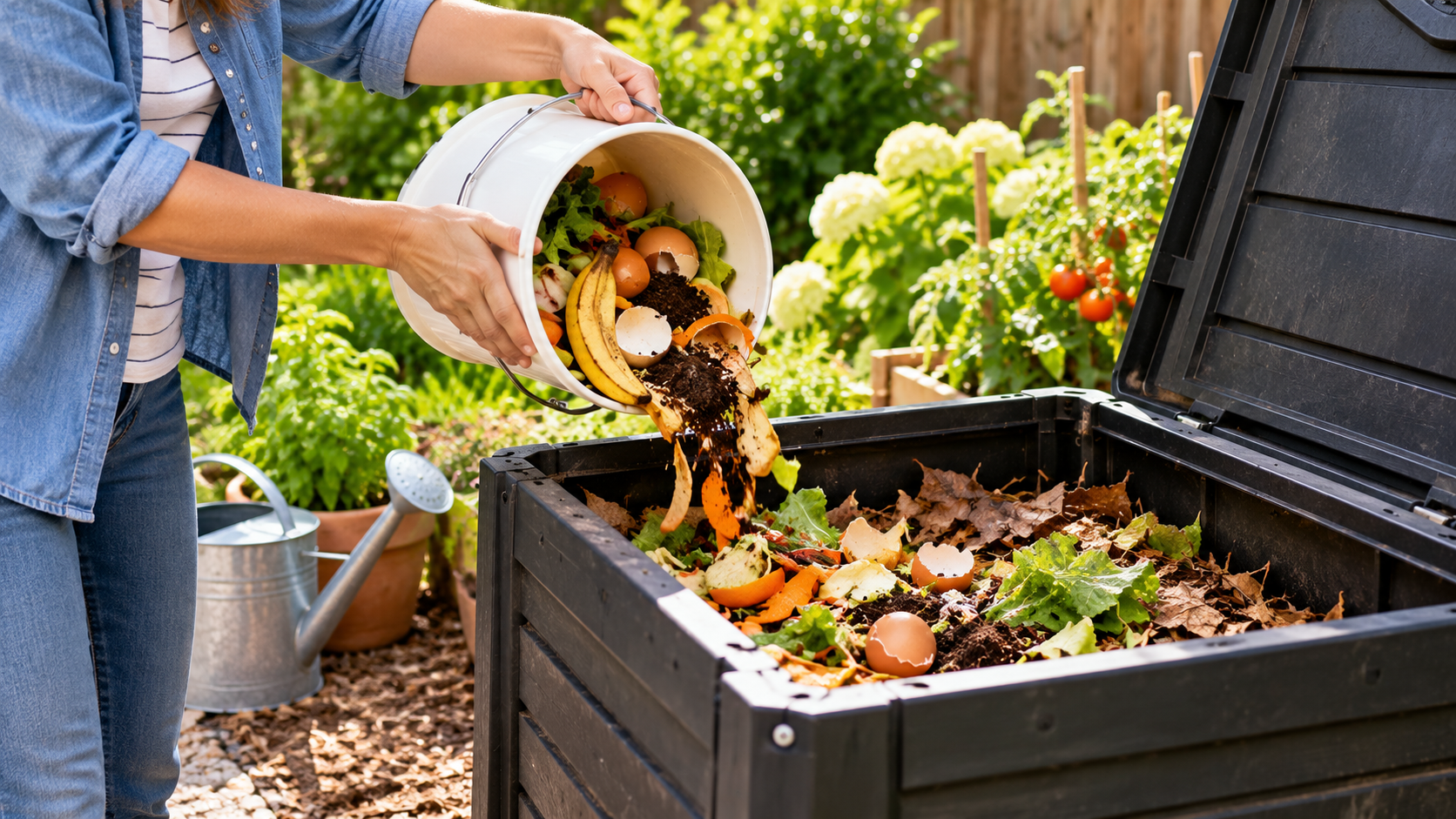
Want to turn kitchen scraps and yard waste into something useful without inviting a colony of worms to move into your house?
Excellent news.
You don't need a worm farm, a complicated composting system, or a degree in soil science.
Composting without worms is entirely possible—and it's one of the easiest ways to reduce household waste while making something useful for your garden.
Traditional composting relies primarily on microorganisms to break down organic materials. Worms may naturally appear in an outdoor compost pile, but you don't have to buy them, feed them separately, or even think about them.
You simply combine the right materials, provide air and moisture, and let nature handle most of the work. Of course, nature occasionally needs a little encouragement.
Especially when your compost pile starts smelling like something that should be investigated by the authorities.
These 20 practical tips will help you get started, avoid common mistakes, and turn everyday scraps into garden compost without making the process unnecessarily complicated.
1. Understand How Composting Without Worms Works
Composting is the natural breakdown of organic materials into a dark, crumbly soil amendment.
Bacteria, fungi, and other microorganisms do most of the work. They need four basic things:
- Carbon-rich materials
- Nitrogen-rich materials
- Oxygen
- Moisture
When these elements are reasonably balanced, organic matter gradually decomposes.
You don't need to add worms. You don't need special compost starters. And you certainly don't need to name anything living in the pile. A simple backyard compost bin can do the job.
2. Choose a Composting Method That Fits Your Space
There are several ways to compost without deliberately adding worms.
Open compost pile: A simple pile of organic materials in a suitable outdoor location.
Enclosed compost bin: A container that keeps materials contained and may help discourage pests.
Compost tumbler: A rotating container designed to make mixing easier.
Aerated compost bin: A system that encourages airflow through vents or other features.
Each method has advantages. A basic pile may be inexpensive and easy to expand. An enclosed bin can look tidier.
A tumbler can be convenient for smaller amounts of material, although it still requires the right mixture and moisture. Choose the system you'll actually maintain.
The fanciest compost bin in the neighborhood won't accomplish much if it becomes a decorative container for forgotten banana peels.
3. Find the Right Location
Place your compost bin or pile somewhere convenient but appropriate for your property. Look for:
- Good drainage
- Reasonable access from the house
- Enough room to add and mix materials
- A location that won't block walkways
- Compliance with local composting rules
A level area with partial shade can work well in many climates. Avoid locations where runoff could contaminate storm drains or waterways.
If you're using an open-bottom bin, placing it directly on suitable soil can help with drainage and allow soil organisms to participate naturally.
Remember that your compost needs to be accessible. If reaching it requires a hike across the yard, you'll be considerably less enthusiastic about taking out the vegetable scraps in February.
4. Learn the Difference Between Greens and Browns
This is the foundation of successful composting. Compost materials are commonly divided into two categories.
Greens: Nitrogen-Rich Materials
These include:
- Fruit and vegetable scraps
- Coffee grounds
- Fresh grass clippings
- Fresh plant trimmings
- Some other moist, nitrogen-rich materials
Browns: Carbon-Rich Materials
These include:
- Dry leaves
- Shredded plain cardboard
- Shredded uncoated paper
- Small dry twigs
- Straw
- Untreated wood chips
Greens provide nitrogen. Browns provide carbon and help create air spaces.
A pile with too many greens can become wet and smelly. A pile with too many browns may break down very slowly.
You want a reasonable balance. Not a compost pile that resembles a giant container of vegetable soup.
5. Start With More Browns Than Greens
For beginners, a useful starting point is approximately two to three parts loose brown materials to one part green materials by volume.
This isn't a scientific formula that needs to be measured with laboratory equipment.
Different materials contain different amounts of carbon and nitrogen, so you'll adjust based on how the pile behaves.
If the compost becomes soggy or smelly, add more browns. If it stays dry and barely decomposes, it may need moisture, greens, or more mixing.
Think of the ratio as a starting point. Not something to argue about over dinner.
6. Chop Large Scraps Into Smaller Pieces
Smaller pieces generally break down faster because microorganisms have more surface area to work with.
You don't need to pulverize every carrot peel. But it helps to break up:
- Large vegetable scraps
- Thick plant stems
- Cardboard
- Small branches
- Large leaves
Use appropriate tools and handle sharp equipment safely. Avoid adding huge pieces of woody material unless you're prepared to wait a long time.
A whole pumpkin can eventually decompose. But your compost pile doesn't need to spend six months getting acquainted with it.
7. Add Kitchen Scraps Regularly

Your kitchen can provide a steady supply of compostable material. Common additions include:
- Fruit peels
- Vegetable trimmings
- Coffee grounds
- Tea leaves
- Crushed eggshells
- Plant-based food scraps
Remove stickers and other noncompostable packaging. Be cautious with tea bags, coffee pods, and products labeled compostable.
Some contain plastics or require industrial composting conditions. Check whether they're suitable for your home system.
Keep a small covered container in the kitchen for collecting scraps. Empty it regularly.
A countertop scrap container is convenient. A countertop scrap container that's been ignored for nine days is considerably less charming.
8. Know What Not to Compost
Not everything belongs in a typical backyard compost bin. For a beginner-friendly home system, avoid:
- Meat and fish
- Bones
- Dairy products
- Greasy or oily foods
- Pet waste from dogs or cats
- Diseased plant material
- Weeds with mature seeds
- Treated or painted wood
- Glossy or plastic-coated paper
- Plastic, glass, and metal
Some specialized composting systems can handle materials that ordinary backyard piles cannot.
But for beginners, keeping the mixture simple helps reduce odors, pests, and contamination. And don't add anything simply because the package says "biodegradable."
That word doesn't necessarily mean the item will break down safely in your backyard bin.
9. Cover Fresh Food Scraps With Browns
One of the easiest ways to reduce odors and pests is to cover newly added food scraps with dry brown materials. After adding vegetable scraps, place a layer of dry leaves, shredded cardboard, or other suitable browns on top.
You can also mix fresh scraps into the interior of an established pile. This helps reduce exposed food waste and provides additional carbon.
Keep a container of dry leaves or shredded cardboard near your compost bin. That way, you won't have to search the yard for something brown every time you peel a banana.
10. Keep Compost Moist but Not Soaking Wet
Microorganisms need moisture to break down organic matter. But too much water can fill air spaces and slow aerobic decomposition.
A useful guideline is that compost should feel like a wrung-out sponge. Damp, but not dripping.
If it's too dry, add a little water and mix. If it's too wet, add dry browns and improve airflow. Rainfall, temperature, and the materials you add will affect moisture levels.
Don't assume the pile needs watering every day. It's compost. Not a houseplant with an elaborate emotional support schedule.
11. Give the Pile Enough Air
Traditional aerobic composting depends on oxygen. When a pile becomes compacted or waterlogged, airflow decreases. That can cause slow decomposition and unpleasant odors.
To improve airflow:
- Mix or turn the pile periodically.
- Include some coarse brown materials.
- Avoid packing everything tightly.
- Prevent excessive moisture.
- Follow the ventilation instructions for your bin.
You don't have to turn the compost constantly. But it shouldn't remain a dense, soggy lump indefinitely. A little air makes a big difference.
12. Turn the Compost When Needed
Turning mixes the materials and introduces oxygen. For an actively managed pile, turning every week or two may help speed decomposition, depending on conditions.
Less frequent turning is also possible, although compost may take longer to mature.
If you're using a tumbler, follow its instructions. If you're using a pile, use an appropriate garden fork or compost aerator.
Avoid lifting heavy, waterlogged material beyond your ability. And don't worry if you miss a week. Your compost isn't going to file a complaint.
13. Don't Expect Every Compost Pile to Get Hot
Some compost piles heat up considerably as microorganisms break down material. This is common in larger, well-balanced, actively managed piles.
But small backyard bins may never reach high temperatures. They can still produce compost through slower decomposition.
Hot composting generally requires enough volume, moisture, oxygen, and an appropriate material balance.
If your pile stays cool, don't automatically assume you've failed. You may simply be using a slower method.
However, don't assume a cool pile will reliably kill weed seeds or plant pathogens. Avoid adding those materials to a basic home compost system.
14. Prevent Compost Odors
Healthy aerobic compost usually smells earthy rather than rotten. If your compost develops an unpleasant smell, something needs attention.
Rotten or Sour Smell
Possible causes:
- Too many wet greens
- Too much moisture
- Insufficient airflow
Try adding dry browns and gently mixing the pile.
Strong Ammonia Smell
This may indicate too much nitrogen-rich material.
Add carbon-rich browns and mix.
Persistent Foul Odors
Check for unsuitable food waste, excessive moisture, or other problems. A compost pile shouldn't smell like a neglected garbage can.
If it does, the solution is usually better balance and airflow—not a bottle of air freshener.
15. Keep Pests Away
Outdoor compost can attract unwanted visitors if food scraps are exposed or unsuitable materials are added.
To discourage pests:
- Avoid meat, dairy, and greasy food waste.
- Cover fresh scraps with browns.
- Use a secure, pest-resistant bin where needed.
- Clean up spilled scraps.
- Keep the surrounding area tidy.
- Follow local wildlife guidance.
In areas with rodents or other persistent pests, an enclosed, appropriately designed bin may be preferable to an open pile.
Never use poison or hazardous pest-control chemicals in compost intended for the garden.
And remember that compost should attract decomposers. Not become the neighborhood raccoon buffet.
16. Add Dry Leaves Instead of Throwing Them Away
Autumn leaves are one of the most useful compost ingredients. They provide carbon and help balance kitchen scraps.
Collect suitable dry leaves and store them for later use. Shredding leaves can help them break down faster and reduce matting.
Avoid leaves contaminated with chemicals or other unwanted materials.
A bag of dry leaves can be particularly handy when your compost becomes too wet. It's also one of the rare occasions when something falling out of a tree is genuinely useful.
17. Be Careful With Grass Clippings
Fresh grass clippings can provide nitrogen. But thick layers may mat together, become slimy, and restrict airflow.
Add grass clippings in thin layers. Mix them with dry leaves or other browns.
Avoid composting grass recently treated with herbicides unless the product label and local guidance confirm it's safe for compost use. And don't feel obligated to collect every grass clipping.
Leaving suitable clippings on the lawn can also return nutrients to the soil. Sometimes the easiest yard chore is the one you don't create.
18. Be Patient With Slow Compost
Composting takes time. Depending on the system, materials, weather, and maintenance, usable compost may take several months or considerably longer.
A well-managed hot compost system can work faster. A small, mostly unattended backyard pile usually takes longer.
Don't judge your progress solely by the calendar. Look at the material.
Is it becoming darker? Are the original scraps less recognizable? Does it smell earthy? Those are encouraging signs.
If you can still identify last month's banana peel, give it more time.
19. Know When Your Compost Is Finished
Finished compost is generally:
- Dark brown
- Crumbly
- Earthy-smelling
- Cool or near ambient temperature
- Mostly free of recognizable food scraps
Some woody pieces may remain. You can screen out larger unfinished material and return it to the pile.
Don't use compost that is still actively heating, smells unpleasant, or contains large amounts of undecomposed food. Immature compost can interfere with plant growth.
And if you're using compost around edible crops, follow appropriate food-safety guidance and avoid contamination.
Good compost should resemble rich, crumbly organic matter. Not a slightly older version of Tuesday's salad.
20. Use Finished Compost Around Your Garden
Once the compost is mature, you can use it to improve garden soil. Depending on the application, it can be:
- Mixed into garden beds
- Spread as a thin soil amendment
- Incorporated into planting areas
- Used around suitable landscape plants
Compost can improve soil structure and contribute organic matter and nutrients.
It isn't a complete replacement for every fertilizer or soil amendment. And it should be used in appropriate amounts for the plants and soil.
For container plants, use a suitable potting mix rather than filling pots with pure backyard compost.
A little finished compost can be helpful. A pot filled entirely with compost may not provide the drainage and structure your houseplants need.
Your Beginner Composting Checklist
- Choose an appropriate outdoor location.
- Select a pile, bin, or tumbler.
- Collect dry leaves or other browns.
- Start saving suitable kitchen scraps.
- Add a mix of greens and browns.
- Cover fresh food scraps.
- Keep the pile damp but not waterlogged.
- Maintain airflow.
- Turn or mix as needed.
- Watch for unpleasant odors.
- Keep pests from accessing food waste.
- Avoid hazardous and unsuitable materials.
- Allow enough time for decomposition.
- Check that compost is mature before using it.
- Add finished compost to suitable garden soil.
The Bottom Line: Composting Doesn't Need to Be Complicated
Composting without worms is a simple way to reduce kitchen and yard waste while creating something useful for your garden.
You don't need expensive equipment. You don't need a complicated formula. And you definitely don't need to maintain a worm colony in the laundry room.
Start with a suitable outdoor bin or pile. Add kitchen scraps and dry brown materials.
Keep everything reasonably moist and aerated. Then give nature time to do its work.
Before long, those vegetable peels and autumn leaves can become dark, crumbly compost that helps improve your garden soil.
Not bad for something that started out as garbage.
Keep Going
Make your home and garden a little greener with these related guides:
- Backyard Family Living: Practical ideas for making the most of your outdoor space.
- Ten Fall Gardening Tips: Get your garden ready for the changing seasons.
- Good Garden Bugs: Learn which insects can actually help your garden.
- Bad Garden Bugs: Identify common garden pests and their damage.
- Green Cleaning and Money-Saving Tips: Reduce household waste and unnecessary spending.
- Easy Money-Saving Ideas: More practical ways to save money around the house.
- Clean Home
- Backyard & Garden
- Tips For Composting Without Worms