Laundry & Stain Removal: How to Wash Clothes and Treat Stains
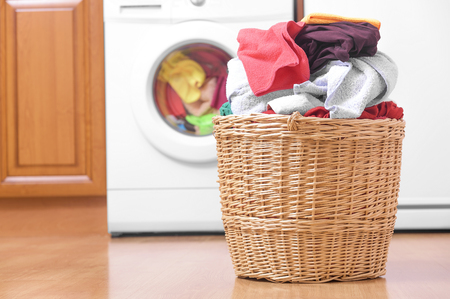
Laundry has one magic trick: it looks finished. Then somebody takes off a pair of socks.
And then there's the shirt with the stain that showed up sometime between breakfast and soccer practice, has its own legal team, and refuses to identify itself.
The good news? You don't need a laundry degree. You need a few basics: sort smart, pick the right water temperature, measure the detergent, treat stains before the dryer, and read the care label.
Everything else is troubleshooting.
Jump to:
- How to Sort Laundry
- How to Wash Clothes: Laundry 101
- What Water Temperature to Use
- How Much Detergent to Use
- Darks and Whites
- How to Wash Towels
- Sweaters and Delicates
- Stain Removal Rules
- Blood and Protein Stains
- Grease Stains
- Chocolate Stains
- Rust Stains
- Unknown Stains
- Homemade Stain Removers
- Clean the Washing Machine
- Dryer Safety
- Laundry With Kids
- Common Laundry Mistakes
- Laundry FAQ
Start With the Care Label
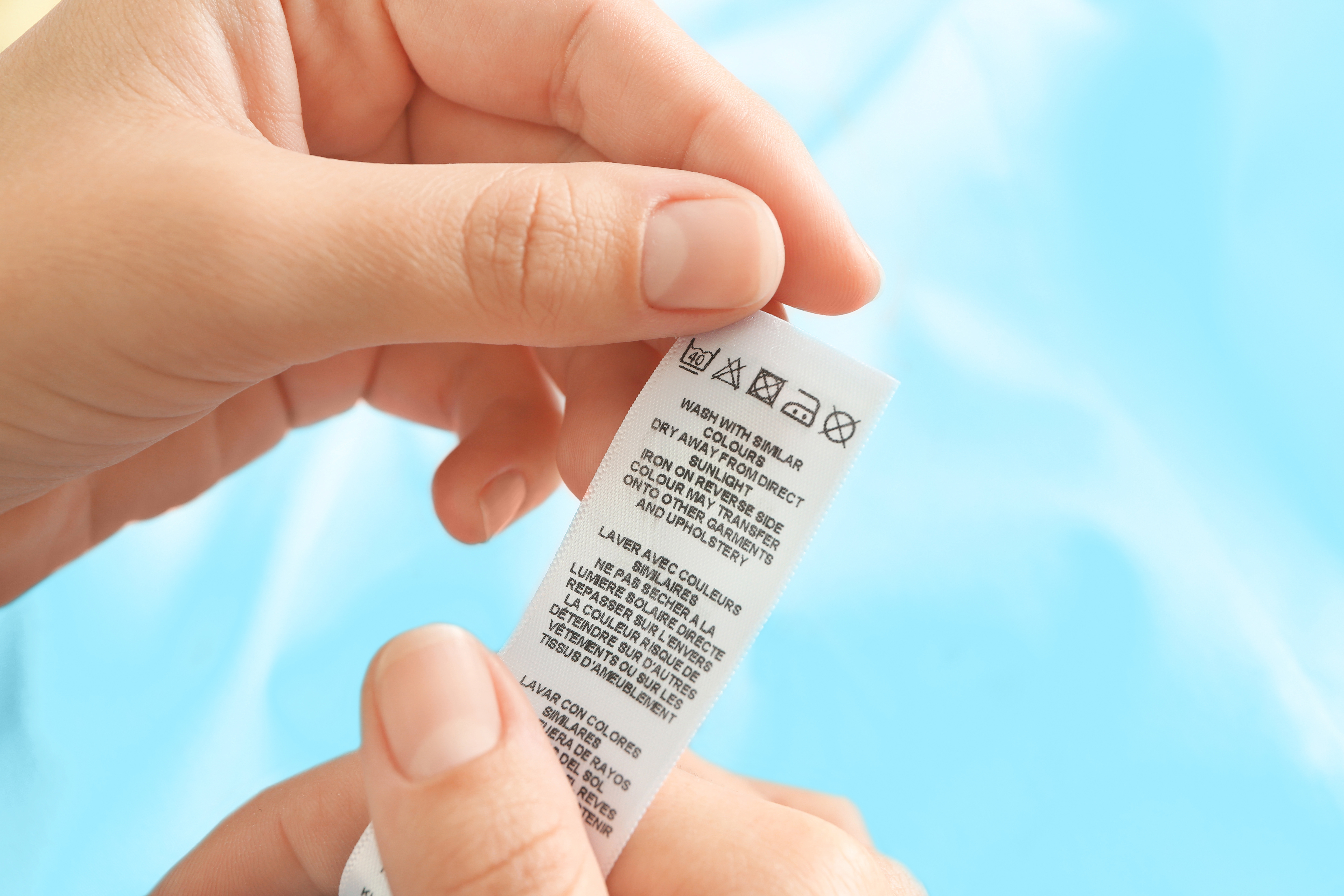
That little tag in the side seam tells you:
• What water temperature to use
• Whether it can be machine washed
• Whether bleach is allowed
• How to dry it
• Whether it needs dry cleaning
Read it before you wash anything new, expensive or delicate. A shirt that's technically clean but now fits a six-year-old is not a laundry victory.
How to Sort Laundry
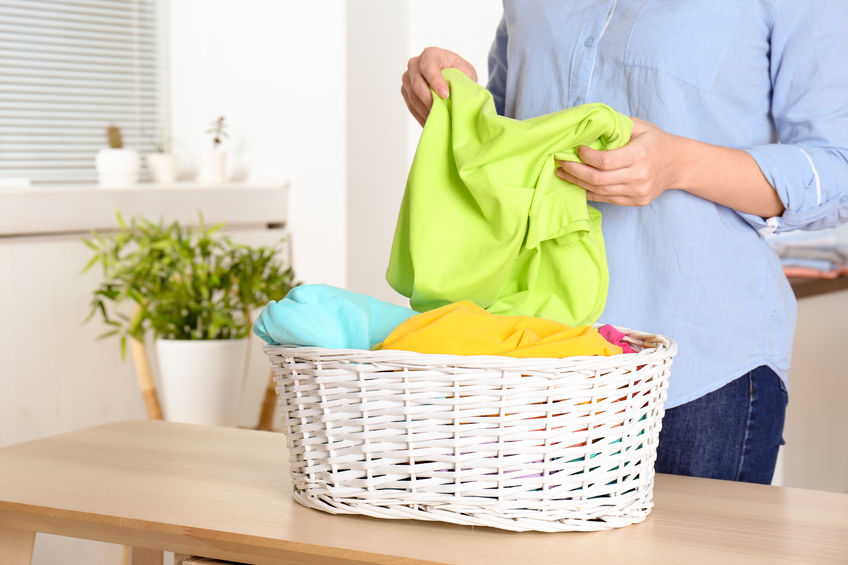
Sort by color, fabric weight, how dirty things are and any special care. Most homes need five piles:
• Whites and very light colors
• Darks
• Regular colors
• Towels and heavy items
• Delicates
The point isn't perfection. It's keeping the new red T-shirt from turning everything pink and the jeans from sanding down your blouses.
How to Wash Clothes: Laundry 101
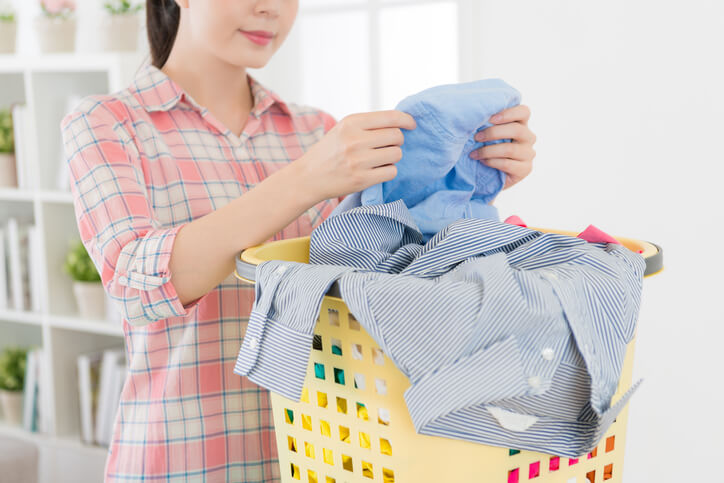
A reliable wash routine comes down to ten steps:
- Check pockets.
- Read the care label.
- Sort the load.
- Pretreat stains.
- Load the washer without cramming it full.
- Add the right amount of detergent.
- Select an appropriate cycle.
- Select the right water temperature.
- Remove clothes promptly — don't let them marinate.
- Dry according to the care label.
That's most of laundry. Everything else is just troubleshooting.
Choose the Right Water Temperature
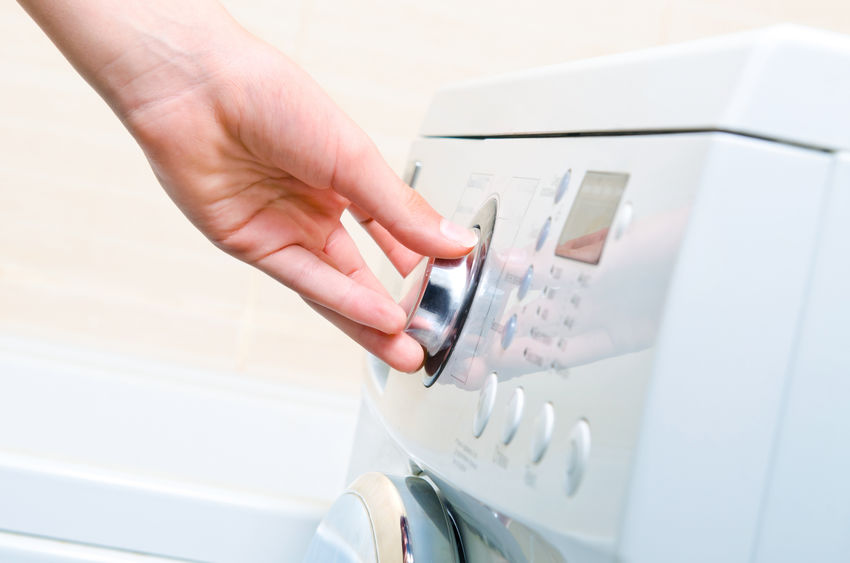
Water temperature affects how well clothes get clean, and whether they shrink, fade or keep their shape.
Cold Water
(About 60–80°F.) Use it for most everyday loads. It's gentler, cheaper and easier on colors. Today's detergents are made to work in cold water. Use cold for:
• Dark and bright colors
• Delicates and anything that might shrink
• Brand-new clothes that might bleed dye
• Lightly dirty everyday loads
• Blood, sweat, egg, dairy and other protein stains (hot water cooks them into the fabric)
Warm Water
(About 90–110°F.) A good middle ground for:
• Regular colors that have already been washed a few times
• Everyday clothes that are moderately dirty
• Synthetics and activewear, if the label allows (some want cold)
Hot Water
(130°F and up.) Save it for:
• Whites
• Sheets, towels and pillowcases, especially after someone's been sick
• Cloth diapers
• Greasy work clothes and anything truly filthy
Hot water shrinks and fades, so check the label first. When someone's been sick, wash bedding and towels on hot and dry them on high. The dryer's heat does a lot of the germ-killing.
Laundry Temperature: Hot, Warm or Cold? →
Use the Right Amount of Laundry Detergent
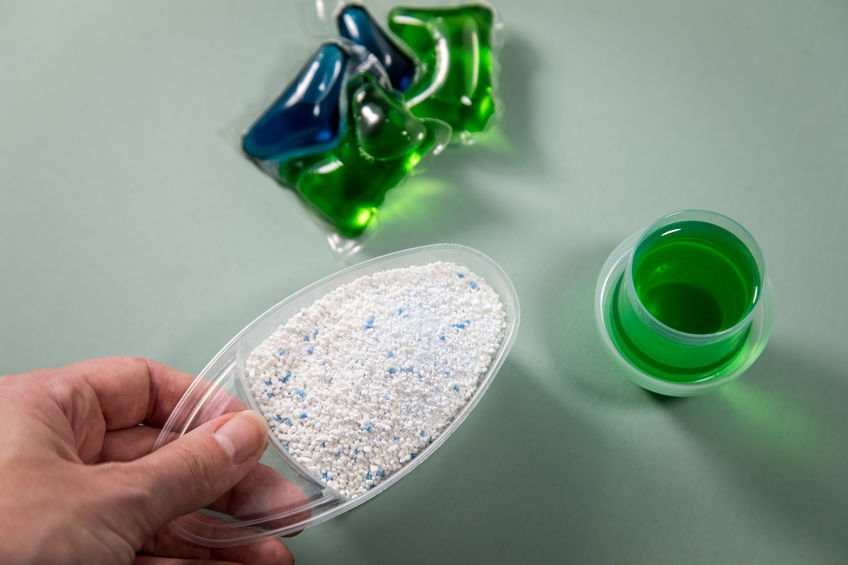
More detergent does not mean cleaner clothes. It means residue, stiff towels, dull colors and a washer that starts to smell.
How much you need depends on:
• The load size
• How dirty the clothes are
• How hard your water is
• How concentrated the detergent is
Start with the line marked on the cap for a normal load. That line is usually a lot lower than the top of the cap. If you have a high-efficiency (HE) washer, use HE detergent. Regular detergent makes too many suds for HE machines.
Laundry Detergent: Liquid or Powder? →
Eliminate Powdery Clothing Stains → (removing-powdery-clothing-stains.html)
Don't Overload the Washing Machine
Clothes need room to move. Overloading means poorer cleaning, poorer rinsing, detergent that doesn't spread through the load and not enough agitation.
Here's the test: you should be able to fit your hand flat on top of the load. Fill the washer, but don't play competitive laundry Tetris.
How to Wash Dark Clothes Without Fading
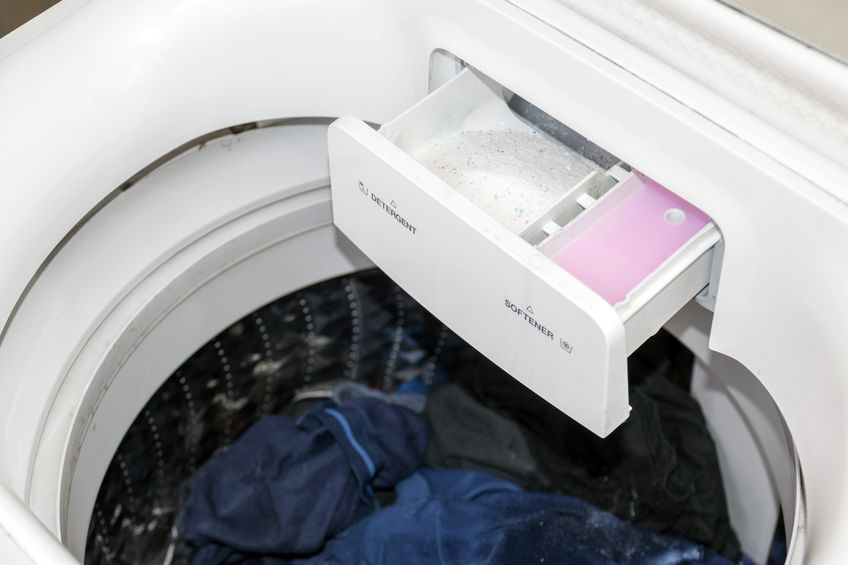
Once a dark color fades, you can't put it back. So:
• Wash with similar colors.
• Turn clothes inside out.
• Use cold water.
• Pick a gentle or normal cycle, not heavy duty.
• Use the right amount of detergent, ideally one made for darks.
• Don't overdry. Take them out while they're still slightly damp, or hang them to dry.
How to Wash Dark Clothes Without Fading →
How to Wash White Clothes
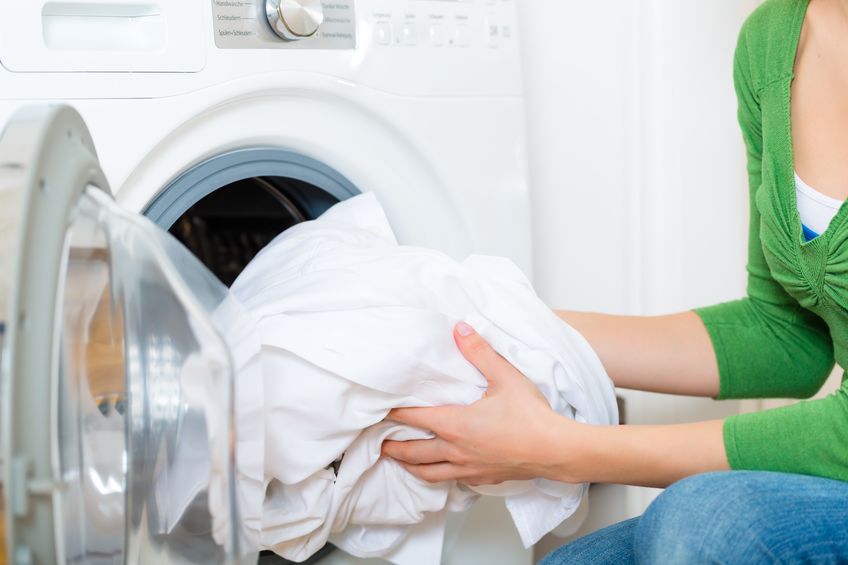
Whites show everything. Keep them bright by:
• Washing them separately from colors, even light ones
• Using the warmest water the label allows
• Adding an oxygen bleach booster for dingy loads
Only use chlorine bleach on sturdy cotton whites, and only if the label allows it. Never use it on wool, silk, spandex or anything with a "non-chlorine bleach only" triangle on the label.
How to Wash Towels
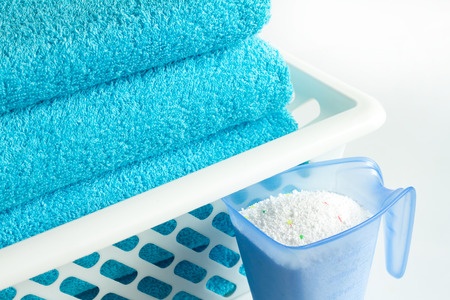
A clean towel should actually dry you off. Here's how to keep yours absorbent:
• Wash them in warm or hot water, depending on the label.
• Don't overload the washer. Towels get heavy fast.
• Use the right amount of detergent. Extra detergent is what makes towels stiff.
• Skip the fabric softener and dryer sheets. They coat the fibers and make towels less absorbent. Toss in a half cup of white vinegar during the rinse instead.
• Dry them all the way through.
Wash heavily soiled towels separately. And don't leave damp towels crumpled in the hamper unless you're trying to grow something.
How to Wash Towels So They Stay Soft and Fluffy →
How to Wash Jeans
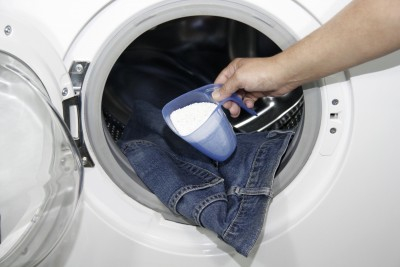
Jeans don't need washing after every wear. Every few wears is plenty, unless they're actually dirty. When you do wash them:
• Check the label.
• Turn them inside out.
• Wash them with similar colors.
• Use cold water.
• Hang them to dry, or tumble on low and pull them out a little damp.
Make Laundry Day a Little Easier
A few good tools go a long way: a mesh bag for delicates, a stain stick for the laundry room and the car, a drying rack, and hampers that people actually use.
→ Shop Cleaning & Organizing Favorites
How to Wash Sweaters
A "sweater" can be wool, cashmere, cotton, acrylic or a blend, and each one acts differently in water. Wishing doesn't change the fabric. So:
• Read the label first.
• Use a wool-safe or gentle detergent. Avoid enzyme detergents on wool and cashmere, because enzymes break down animal fibers.
• Hand wash, or use the gentle or wool cycle in cold water.
• Don't wring it out. Roll it in a towel to press out the water.
• Reshape it and dry it flat. Never hang a wet sweater, unless you want it to reach your knees.
How to Machine Wash Sweaters →
How to Unshrink a Sweater
It doesn't always work, but it's worth a try before you give the sweater to a smaller relative. Soak it for about 30 minutes in lukewarm water with a tablespoon or two of hair conditioner or baby shampoo.
Gently stretch it back toward its original shape, then dry it flat, reshaping as it dries. Wool and cotton respond best. Synthetics usually don't respond at all.
The best fix is prevention: cold water and no dryer.
Caring for Delicate and Expensive Clothing
• Read the label.
• Hand wash or use the gentle cycle when the label says to, and put delicates in a mesh bag.
• Skip the do-it-yourself stain experiments on silk, cashmere and anything you love.
• Test any product on a hidden seam first.
• "Dry Clean Only" means dry clean only.
Leather and suede need their own care entirely.
How to Clean Leather and Suede →
Stain Removal Rules
1. Figure out what the stain is.
2. Check the fabric and the care label.
3. Gently scrape or blot off the excess.
4. Treat it according to the stain type.
5. Wash as the label directs.
6. Check the stain before drying. Air-dry it if you're not sure it's gone.
That last one matters most. Dryer heat can set a stain for good. If it's still there, treat it and wash it again. The dryer won't change its mind.
Blotting vs. Rubbing Stains
Rubbing spreads the stain and roughs up the fabric. Blot instead:
• Work from the outside of the stain toward the center, so it doesn't spread.
• Keep switching to a clean part of the cloth.
• Press, don't scrub. Your fabric will last longer.
When you can, flush the stain from the back of the fabric. That pushes it out the way it came in, instead of driving it deeper.
How to Remove Blood and Other Protein Stains
Blood, sweat, egg, milk, baby formula and grass all have one rule in common: cold water only. Hot water cooks the protein right into the fibers.
1. Rinse from the back with cold water as soon as you can.
2. Rub in a little enzyme laundry detergent or stain remover and let it sit for 15 to 30 minutes.
3. For dried blood on white cotton, dab on 3% hydrogen peroxide. Test it first, because it can lighten colors.
4. Wash in cold water and check before drying.
How to Remove Grease Stains
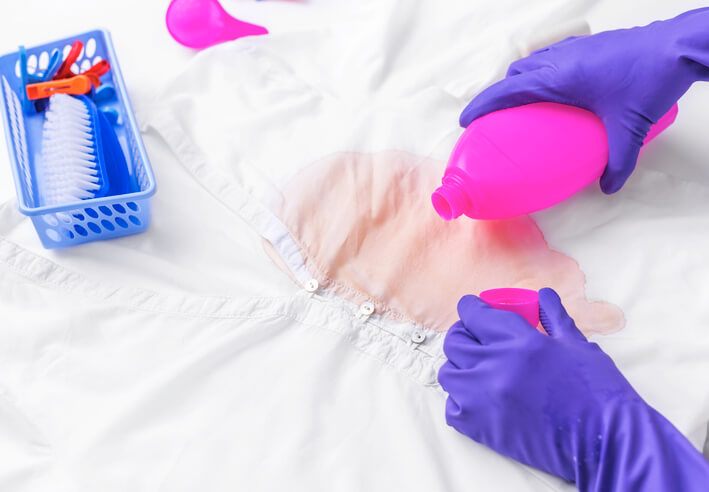
1. Blot up as much oil as you can.
2. Don't scrub hard.
3. Gently work in a drop of liquid dish soap. Test it first on dyed or delicate fabrics.
4. Let it sit for 10 minutes, then use a laundry pretreatment.
5. Wash in the warmest water the label allows.
6. Check it before drying. If you still see an oily shadow, repeat.
Grease Stain Removal → (grease-stain-removal-tips.html)
How to Remove Chocolate Stains
Chocolate is delicious. It is considerably less charming on a couch cushion or a kid's school shirt. It's part fat and part protein, so treat both:
1. Scrape off the excess with a dull knife. Don't spread it around.
2. Flush the stain from the back with cold water.
3. Work in liquid dish soap or an enzyme stain remover, and let it sit for 15 minutes.
4. Wash in the warmest water the label allows, then check before drying.
How to Remove Chocolate Stains →
How to Remove Rust Stains From Clothes
First rule: no chlorine bleach. It reacts with rust and can make the stain darker and permanent.
On white or colorfast cotton, sprinkle the stain with salt, squeeze lemon juice over it and let it sit in the sun for an hour or two. For tougher stains, use a rust remover made for fabric. Wear gloves and follow the label exactly. Some of these products are strong. Don't dry the item until the rust is gone.
How to Remove Rust Stains From Clothes, Even Old Stains →
How to Remove Unknown Stains
Play detective. Look at the stain's:
• Color
• Texture
• Smell
• Location (collar? knee? lap?)
• Whether it looks oily
• Whether there's crusty residue
Then start with the gentlest method: cold water and a little dish soap or enzyme detergent. Work up from there. For silk, wool or anything expensive, take it to a professional and tell them what you think it is.
Homemade Laundry Stain Removers
You probably already have some of the best stain fighters in your kitchen:
• Liquid dish soap: grease and food stains
• 3% hydrogen peroxide: blood and organic stains on whites (test colors first)
• Baking soda paste: sweat odors and stains in underarms
• White vinegar: deodorizing, and softening towels in the rinse
• Salt and lemon juice: rust on white cotton
Test everything on a hidden seam first. "Natural" doesn't mean harmless to fabric. And never mix bleach with vinegar or ammonia, or hydrogen peroxide with vinegar. Those combinations make toxic fumes.
Homemade Laundry Stain Removers →
Clean the Washing Machine
If your clean laundry smells funny, check the washer before you blame the detergent. Once a month:
• Run the cleaning cycle, or an empty hot cycle with a washer cleaner.
• Clean the drain pump filter, if your machine has one. It's usually behind a small door at the bottom front.
• Wipe out the detergent and softener dispensers.
• Wipe the rubber door seal on a front-loader, including the folds.
• Wipe the drum.
• Wipe the outside.
Between loads, leave the door and the detergent drawer open so everything can dry out.
Washing Machine Cleaning Tips →
Keep the Dryer Safe
Clean the lint screen after every load. Lint buildup is a leading cause of dryer fires. Have the dryer vent duct cleaned at least once a year.
If clothes are taking longer to dry than they used to, a clogged vent is the usual culprit. And don't run the dryer when you're asleep or out of the house.
Prevent Laundry Odors
Prevent Laundry Odors
• Don't leave wet laundry sitting in the washer.
• Let damp towels dry before they go in the hamper.
• Use the right amount of detergent.
• Keep the washer clean.
• Make sure everything is completely dry before you put it away.
• Don't stash damp clothes in a closed gym bag or closet.
Fabric softener and scented beads cover up odors. They don't fix them.
Organize the Laundry Routine
Pick the system that fits how much laundry your household makes:
• One load most days
• Set laundry days each week
• Different loads on different days (towels Monday, sheets Saturday)
Whichever you choose, laundry isn't done until it's put away. Laundry sitting clean in a basket for six days isn't technically finished.
Keep Hampers Where Clothes Come Off
Put hampers in the bedrooms, in the bathrooms if that's where people change, and in the laundry area. A hamper across the house from where people change clothes is a theoretical hamper.
Fold and Put Away Laundry Faster
Keep folding simple. Nobody needs department-store towels. Fold right out of the dryer to cut down on wrinkles, and put everything away the same day. If the drawers are too full to close, that's not a folding problem. It's a decluttering problem.
Laundry With Kids
Kids can help, and they should. Try:
• Putting dirty clothes in the hamper (yes, in it)
• Matching socks
• Sorting lights and darks
• Folding towels
• Carrying clean clothes to their rooms
• Putting away simple items
The goal is teaching responsibility, not perfect folding.
One important safety note: keep detergent pods up high or locked away. They look like candy to little kids and can be very dangerous if swallowed or squeezed into the eyes. If a child gets into one, call Poison Control at 1-800-222-1222 right away.
Laundry Chores for Kids by Age →
Curtains and Household Fabrics
Check the label before you wash curtains, slipcovers or throw pillows. Big items get very heavy when they're wet and can throw a washer off balance. Many lined drapes, blackout curtains and some window treatments aren't washable at all, so vacuum or steam them instead.
Seasonal Stains
Summer brings its own lineup:
• Grass
• Ice cream
• Fruit and berries
• Sunscreen
• Barbecue sauce
• Good old outdoor dirt
Fall brings mud, leaves and pumpkin guts. Halloween brings face paint, fake blood and costumes made of materials that were never meant to see a washing machine. The rule is the same all year: identify the stain, treat it, wash it and check it before drying.
Summer Laundry Stain Solutions →
Tricks for Treating Halloween Stains →
Common Laundry Mistakes
Using too much detergent
It doesn't make clothes cleaner. It just leaves residue behind.
Washing everything together
That's how a new red T-shirt makes a whole load of pink underwear.
Overloading the washer
If you can't fit a hand on top, take something out.
Drying stains before checking them
The dryer makes stains permanent.
Ignoring care labels
They're there for a reason. Read them.
Leaving wet laundry in the washer
You'll be washing it again tomorrow.
Laundry FAQ
What temperature should I wash clothes in? Cold works for most everyday loads, darks and delicates. Use warm for moderately dirty clothes, and save hot for whites, towels, sheets and anything truly filthy. Always check the care label first.
How much laundry detergent should I use? Less than you think. Start with the line on the cap for a normal load. In an HE washer, use HE detergent.
How do you get blood out of clothes? Rinse it from the back with cold water, never hot. Then pretreat it with an enzyme detergent and wash in cold water. On white cotton, 3% hydrogen peroxide helps with dried stains.
Why do my towels smell even after washing? Usually it's too much detergent, fabric softener buildup, a dirty washer or towels that sat damp. Use less detergent, skip the softener, clean the washer and dry the towels completely.
Can you get a stain out after it's been through the dryer? Sometimes. Pretreat it again, soak it in an oxygen bleach solution if the fabric allows, then rewash it. Old, heat-set stains may not come out completely.
Want Laundry That Doesn't Take Over Your Weekend?
My book, The Daily Home Reset, builds laundry into a 15-minute daily routine, so you never face the Mount Everest of hampers again.
And if your closet is so full there's nowhere to put the clean clothes, Room by Room: How to Declutter a Lifetime of Stuff and Get Your Space Back will help you decide what really needs to stay.
Kindle $12.99 · Paperback $14.99 · Hardcover $17.99Keep Going
Clean clothes are just the start, so keep your whole home clean, organized and running smoothly with these related guides:
• Easy House Cleaning Tips: Faster, smarter ways to clean every room in the house.
• How to Clean and Organize Your Kitchen: Counters, appliances, the pantry and a 15-minute daily reset.
• Bathroom Cleaning and Organizing: Get the bathroom clean and keep it that way.
• Green Cleaning Guide: Clean safely with fewer products and save money.
• How to Organize Your Home Room by Room: Simple systems for every room, from the entryway to the closets.
• Home Maintenance: Month-by-month upkeep, including your washer and dryer.
• Simplify Family Life at Home: Chores, routines and systems that make every day easier.
• Safe at Home: Practical safety tips for every room and every age.
- Clean Home
- Laundry Guide